Discovery · Animals · Amphibians
Short Answer
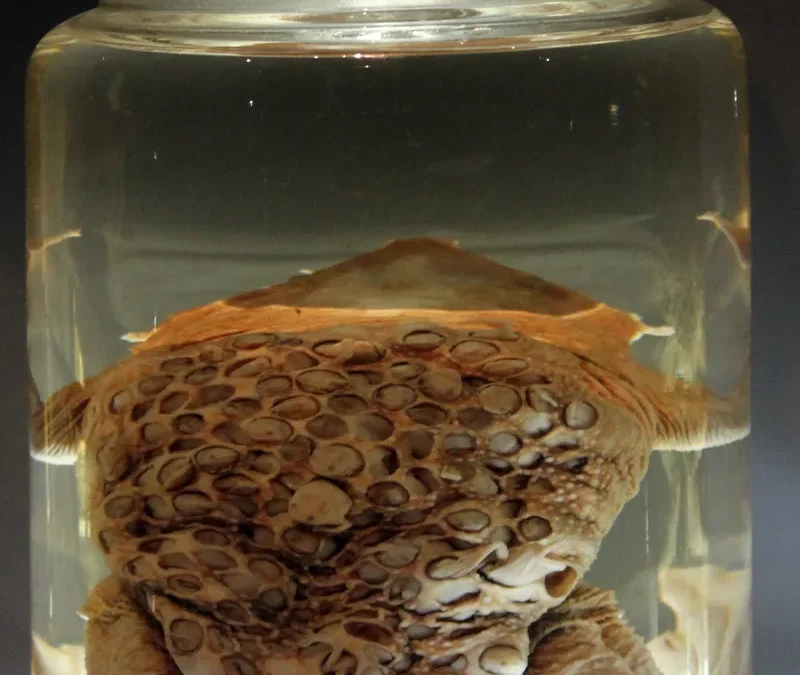
In the Surinam toad (Pipa pipa), fertilized eggs settle onto the female’s back; the skin of the back surrounds the eggs and forms chamber-like structures. Development is completed there, and the young emerge from the mother’s back as small toads. Developmental modes can differ in related Pipa species; while a larval stage continues in some species, Pipa pipa is known as an example of direct development. The formation of protective micro-pockets on a mother’s back shows how unusual and diverse parental care can be in the amphibian world.
Real observation video: you can directly watch the young emerge from the chambers on the Surinam toad’s back.
What Are We Observing?
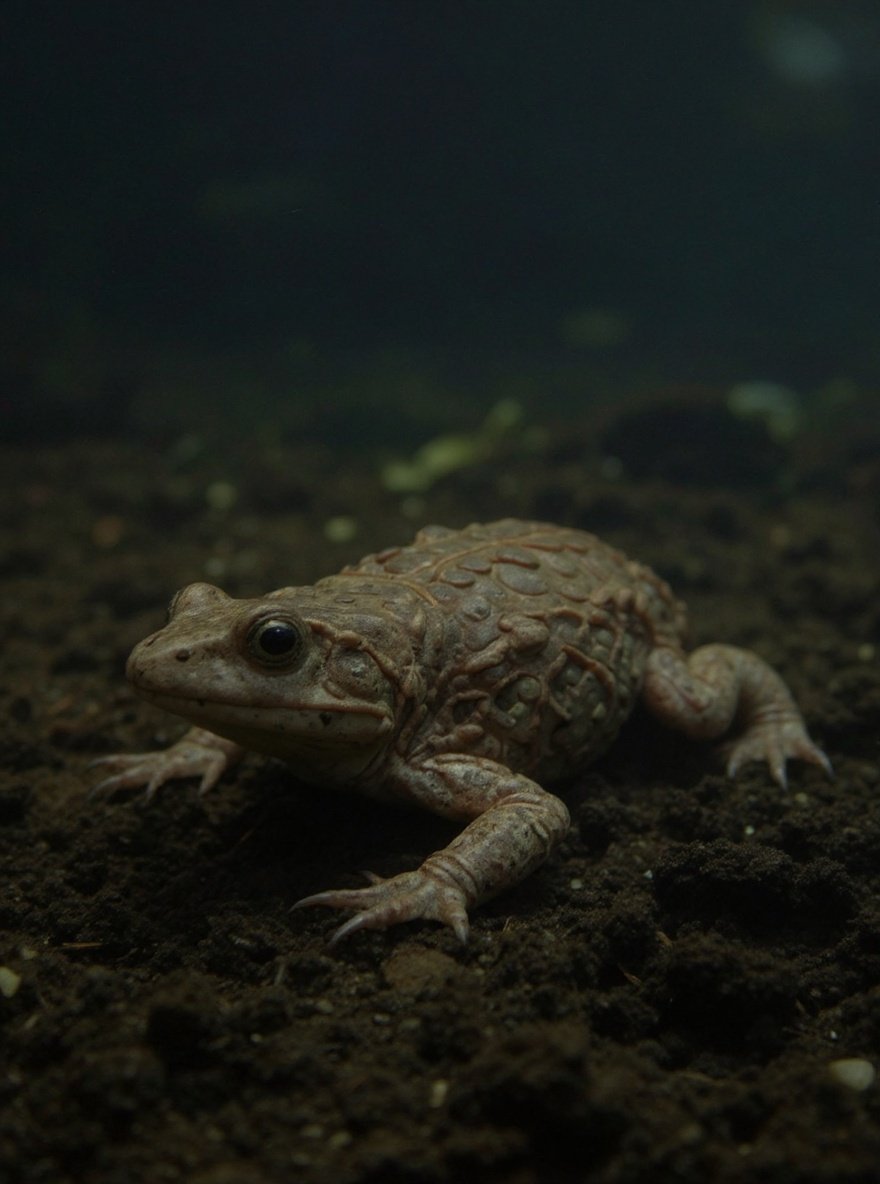
The Surinam toad already looks different from the usual image of a frog. Its flat body, aquatic lifestyle, and star-like fingertips stand out. But what makes it truly surprising is the way its young develop.
Eggs are not randomly released into water and abandoned. After fertilization, they settle onto the female’s back. The skin forms protective chambers around them. Development continues inside these chambers. At the end, small toads emerge through openings in the back skin.
On social media, this scene is often presented in a shocking way. Discovery language does not do that. We approach the topic not through fear or disgust, but through biological parental care and developmental diversity.
The Science
AmphibiaWeb resources explain that Pipa pipa eggs settle onto the female’s back, the skin surrounds them, and the young complete development there. The Pipidae family account also summarizes that fertilized eggs in the Surinam toad become enclosed by skin on the female’s back and that young emerge from there.
Broad studies on amphibian parental care show that reproductive and developmental modes in frogs are extremely diverse. In some species eggs are placed on leaves, in some they develop in foam, and in others males or females show particular care behaviors. Pipa pipa is one of the most striking examples of this diversity.
The “Developmental Diversity of Amphibians” work explains that carrying young on the back, dorsal pouches, and similar developmental strategies can be seen in different groups of amphibians. This shows us that frog reproduction cannot be reduced to one pattern; different species have different environmental and developmental arrangements.
The “Wow” Moment
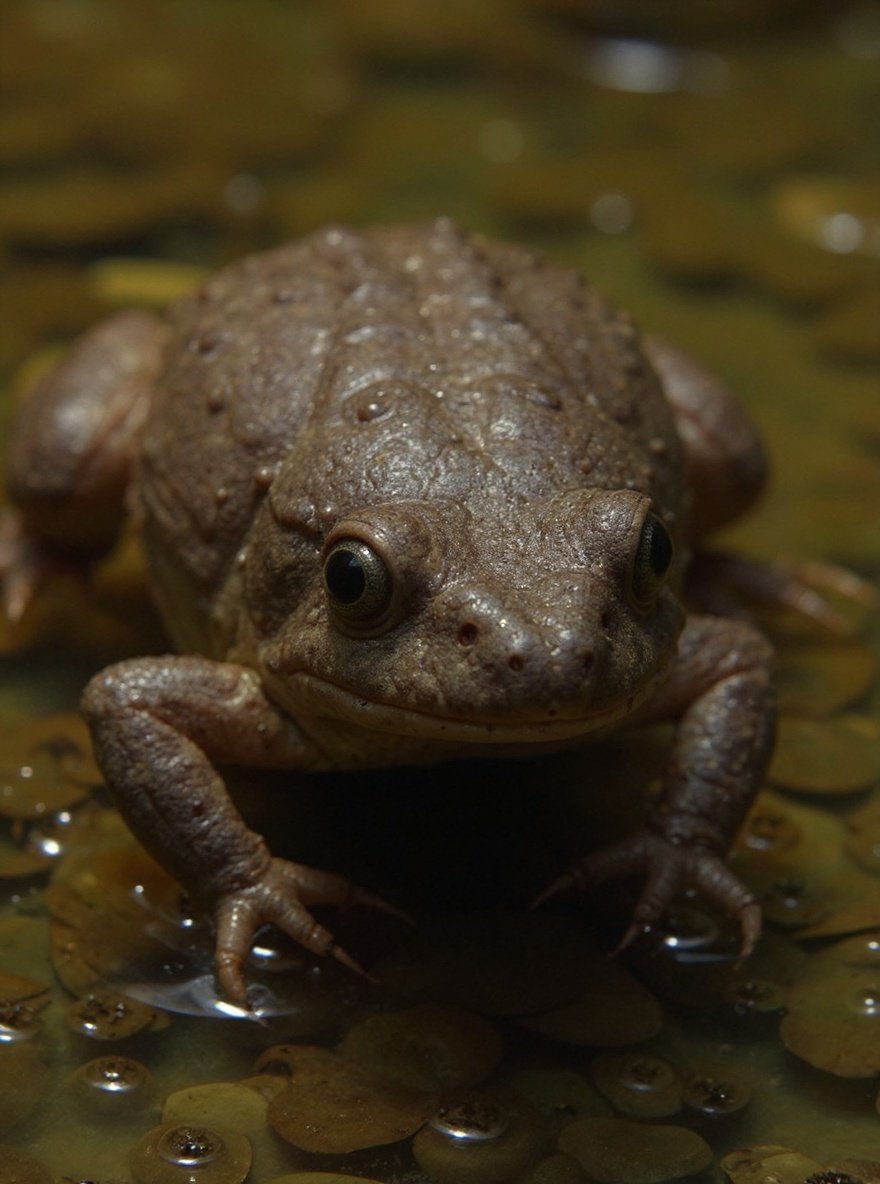
The wow point is that the young develop on a special surface of the mother’s body. The back skin does not remain an ordinary outer covering; protective chambers form around the eggs. Here, the skin acts as boundary, contact surface, and temporary incubation area at the same time.
This system makes us think of “parenting” not only as behavior but also as body structure. In some creatures, care is not only making a nest or carrying young. A part of the body can become the developmental environment for the young.
What Humans Learned
This subject’s strongest link to human technology is in the area of “Protective Biological Incubation Surfaces and Carrier Micro-Pockets”. We should not say, “this device was made from the Surinam toad.” But the principle is strong: forming protective micro-pockets on a surface for a sensitive developmental process.
In human technology, related ideas appear in biocompatible incubation surfaces, embryo culture systems, microfluidic chambers, tissue engineering scaffolds, and micro-pockets that carry sensitive cells. But the connection here should be made through “similar problem,” not “direct inspiration”: how can a small and sensitive life form be protected in a suitable micro-environment?
This distinction is important for Discovery’s scientific honesty.
Up Close
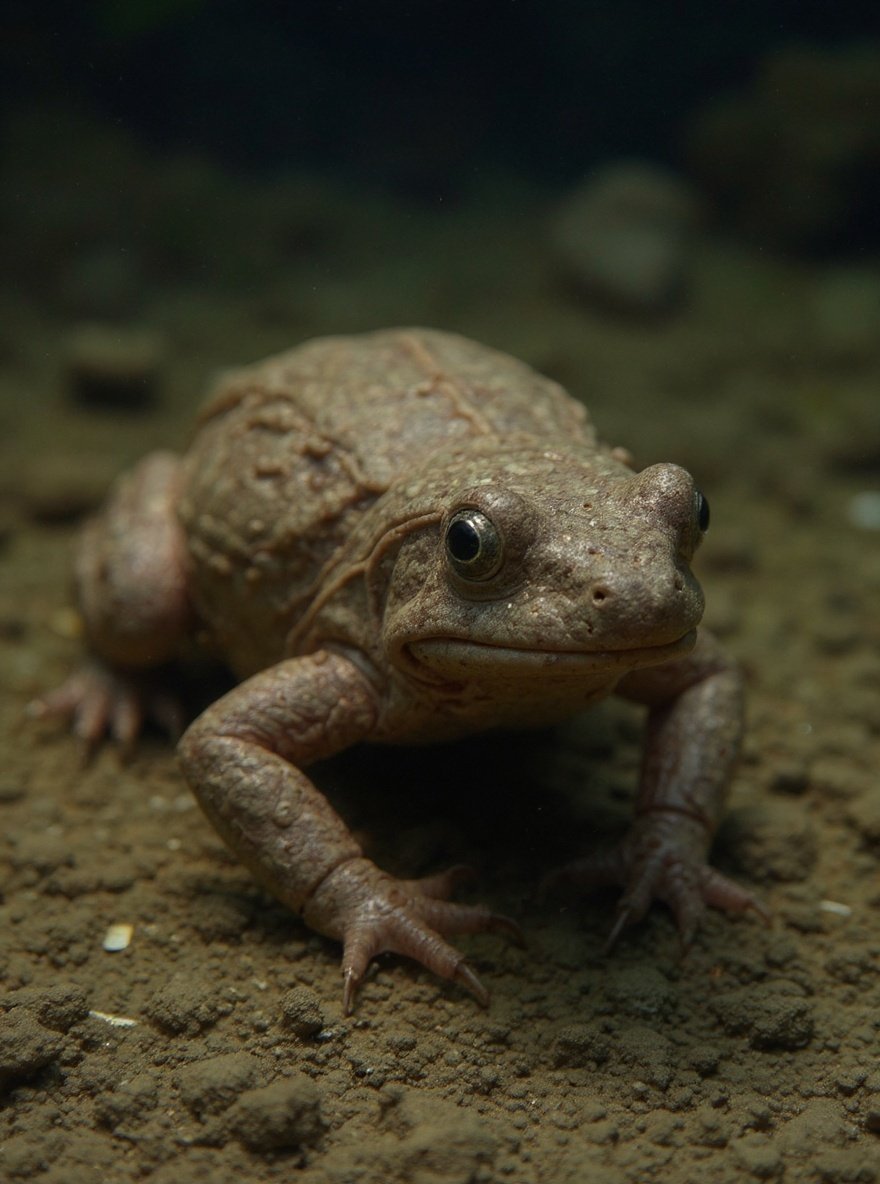
Think of a seed. For a seed to develop, it needs the right moisture, temperature, and protection. In the Surinam toad, the young also develop not in an ordinary open area but inside protective pockets. These pockets may look strange from outside; but in terms of biological function, they are delicate protection spaces.
This example also shows us that our sense of aesthetics can sometimes block us from seeing biological wisdom. A structure that seems strange at first glance may, when examined closely, be part of a very fine care system.
A Window for Reflection
The Surinam toad strongly brings to mind mercy and protection. The young cannot build their own developmental environment. The skin on the mother’s back does not design an incubation system by its own intellect. Yet in the created order, micro-pockets form where the young develop and life is protected.
This wonder should be directed not to the creature itself, but to Allah who created it. A back surface becoming a protective nursery reminds us that bodies are not only outer appearance. Every organ, every tissue, and every process can open a different door of wisdom when considered in its proper place.
What It Tells Us Today
This topic teaches us not to judge by appearance. A biological event that seems strange or even unsettling at first glance may, when studied closely, be full of protection, care, and developmental balance. Scientific curiosity is valuable exactly here: trying to understand before reacting.
For DuaMio Discovery, this article moves the amphibian series beyond “interesting frog features.” It opens deeper themes such as parenting, protection, and development. Even micro-pockets on a small creature’s back can, when seen carefully, lead a person toward wonder and reflection.
Discover, marvel, remember the Creator.
Sources
- https://commons.wikimedia.org/wiki/File:2013-03_Pipa_pipa_Gro%C3%9Fe_Wabenkr%C3%B6te_anagoria.JPG — Real source photograph used for the hero image (Wikimedia Commons).
- Furness & Capellini, 2019 — “The evolution of parental care diversity in amphibians”, Nature Communications. Nature
- Vági et al., 2019 — “Parental care and the evolution of terrestriality in frogs”. Royal Society
- Elinson & del Pino, 2012 — “Developmental Diversity of Amphibians”. PMC
- Schulte et al., 2020 — “Developments in Amphibian Parental Care Research”. BioOne
- AmphibiaWeb — Pipa pipa account. AmphibiaWeb
- AmphibiaWeb — Pipidae family account. AmphibiaWeb
- Whittington et al., 2022 — “Embryonic specializations for vertebrate placentation”, Philosophical Transactions of the Royal Society B. Royal Society
Coming soon
Listen to these topics in the app, track your progress.
In the DuaMio app you’ll listen to every topic — not to memorize, but to comprehend.
Image note: The hero image of this article is a real source photograph. The three in-article images were generated with AI from that real reference to illustrate the subject more clearly.
Content note: This article was compiled with AI assistance based on reliable scientific sources and editorially reviewed before publication.