Discovery / Animals / Birds
Short Answer
The jacana can spread its weight over a wide area thanks to its very long toes and claws. In this way, while walking on thin, flexible, floating plant leaves, it does not place too much pressure on a single point. The mechanism is similar to how snowshoes spread human weight over snow.
When we look carefully at this small bird’s feet, we see how important surface pressure is in daily life. When the same weight is distributed over a different area, the result can change completely.
What Are We Observing?
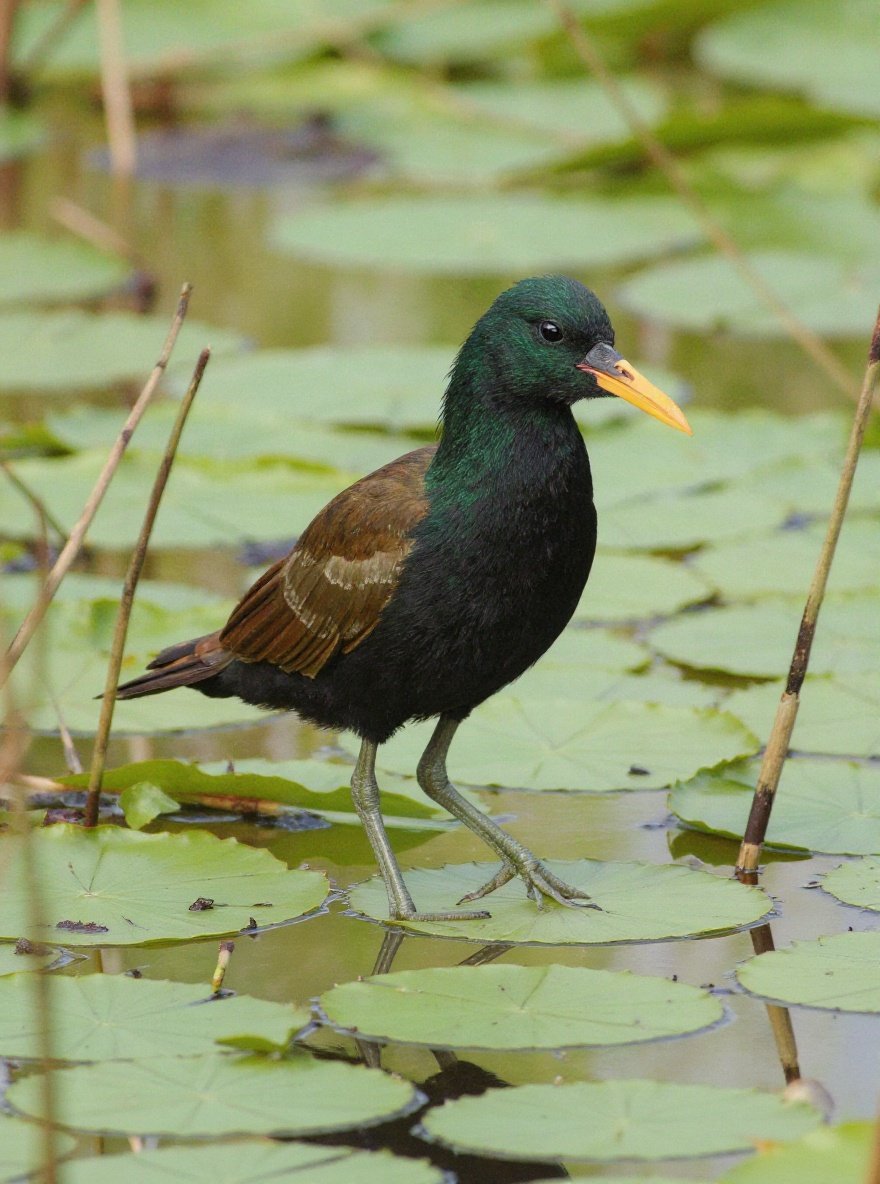
Jacanas, also known as lily-trotters, are elegant birds that live in tropical wetlands. They are often seen walking on water lily leaves, aquatic plants, and floating vegetation. For this reason, in some places they are also known by popular names such as “Jesus bird”; scientifically, however, the matter is not a miraculous walk, but foot structure and pressure distribution.
The toes of jacanas are extraordinarily long relative to their bodies. These toes, which look like thin twigs, distribute the bird’s weight not onto one small point, but across a wider surface. In this way, the pressure on the leaf decreases and the chance that the leaf will sink or tear is reduced.
The Science
Pressure is understood by dividing the force by the area over which it is applied. If the same weight is placed on a small area, pressure increases; if it is spread over a wide area, pressure decreases. The jacana’s long toes come into play exactly here. The bird’s weight is distributed along the long toes instead of being squeezed into a narrow point under the foot.
Birds of the World and other bird resources explain that the long, slender toes of the jacana family are adapted for walking on floating vegetation. Institutional sources such as San Diego Zoo and Audubon also state that these long toes make movement on water lily leaves easier by spreading weight over a wider area.
The point to be careful about here is this: the bird is not walking on water; it is walking on the vegetation on top of the water. The effect is related to the carrying capacity of the leaf and the area of the bird’s foot.
The “Wow” Moment
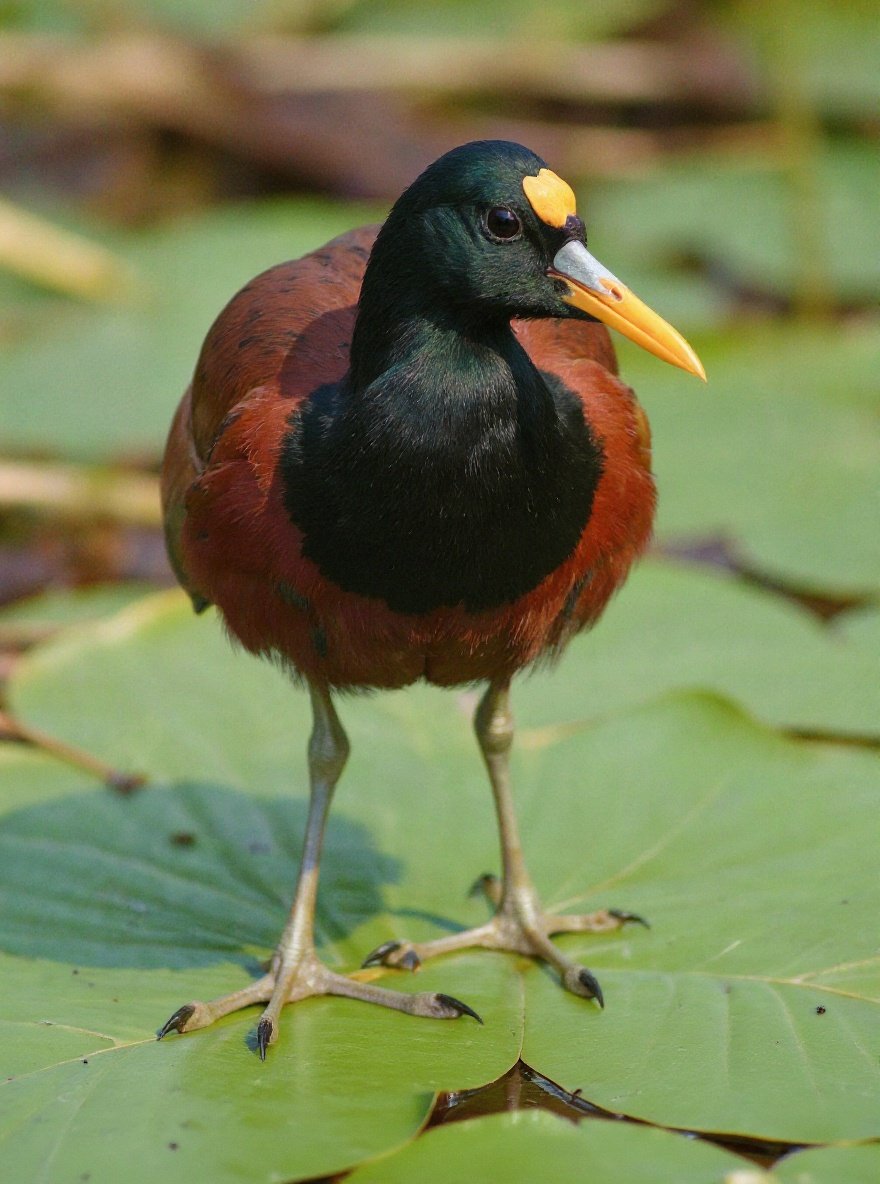
The “wow” point is that the result changes even though the bird’s weight does not. If the same bird stepped on the same leaf with short, small feet, it could sink the leaf more easily. But because long toes distribute the weight, movement on the leaf becomes possible.
We see this principle when walking on snow in winter too. When you step onto snow with normal shoes, your foot may sink. A snowshoe acts as if it enlarges your foot; because your weight is spread over a wider area, you sink less into the snow. The same physics appears in different scenes: one in the foot of a bird in a wetland, the other in a tool humans use on snowy terrain.
Inspired by Nature
The jacana subject creates a very clear connection with snowshoes and surface pressure distribution technologies. It would not be correct here to say directly that “snowshoes were invented from the jacana.” But the two systems share the same principle: spreading weight over a wider area.
This principle is seen not only in snowshoes, but also in marsh vehicles, wide-based tracks, some robotic foot designs, and support systems used on delicate surfaces. In engineering, if you want to avoid damaging a surface or reduce sinking, you need to increase the contact area.
The jacana’s foot makes this idea visible in a very simple way: long toes given to a small living being change the whole movement strategy.
Up Close
Imagine pressing the tip of a pencil into a soft sponge. Because the tip is small, it easily goes into the sponge. If you apply the same force with the cover of a book, the sponge collapses less. The force may be the same; but when the contact area changes, the pressure changes.
There is a similar logic in a jacana walking on a water lily leaf. The foot is not narrow like the tip of a pencil; it is like a structure spread out with long toes. That is why it can move more steadily on thin leaves.
A Window for Reflection
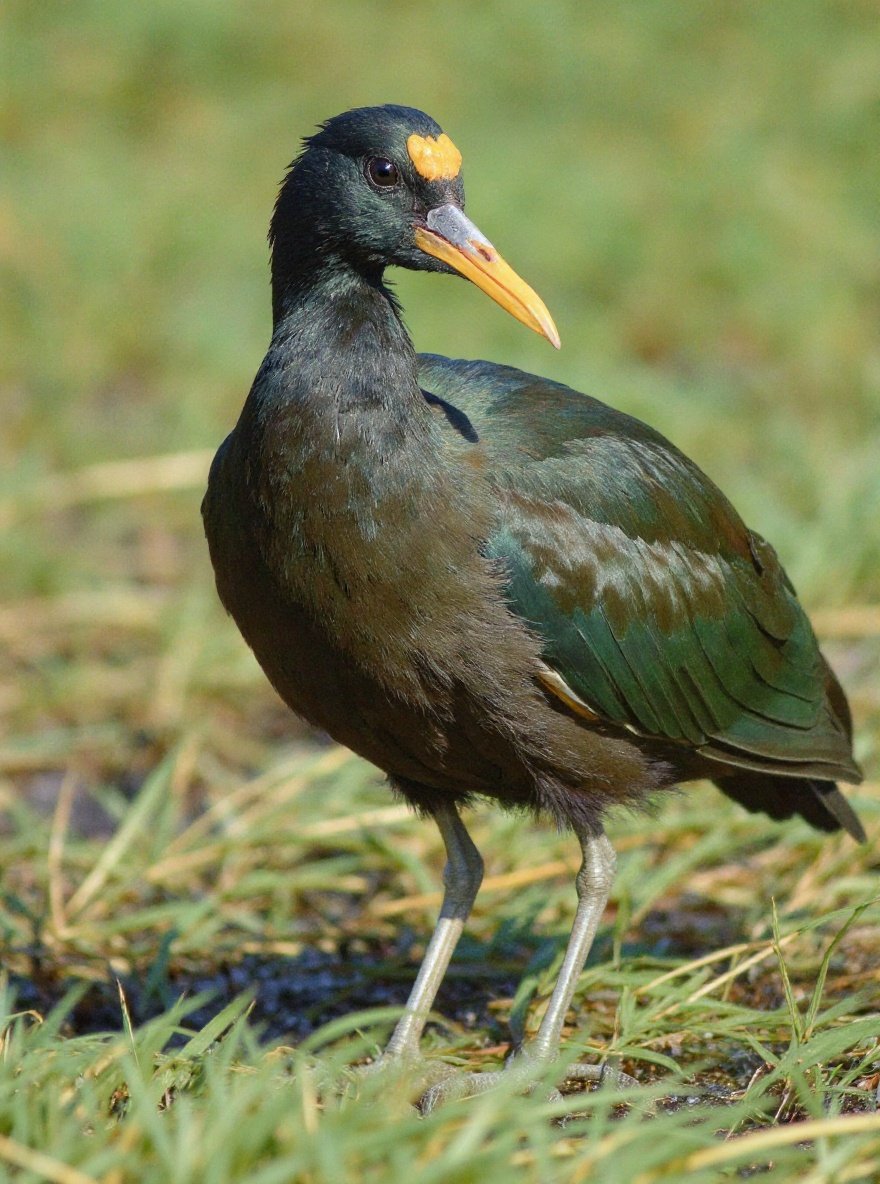
This observation shows how a tiny detail can make a great difference. Long toes are not only interesting in shape; they carry a function suited to the environment in which the bird lives. This harmony invites a person to think, “Which detail in a living being’s life serves which purpose?”
From the perspective of Islamic reflection, wonder is not loaded onto the bird as if it were an independent achievement. One reflects on the measure in Allah’s creation, who gave it this body, this foot structure suited to its environment, and this way of life. Sometimes wisdom is hidden not in large and showy structures, but in the length of a slender toe.
What It Tells Us Today
The jacana reminds us that problems are sometimes solved not by increasing force, but by distributing force correctly. Life is like this too: if a burden falls on one point, it can break; if it is shared correctly, it becomes bearable.
Scientifically, this subject teaches pressure. As reflection, it reminds us of measure, balance, and the importance of small details. When looked at carefully, there is a physics lesson even in a bird’s foot.
In DuaMio Discovery, the aim is to open such seemingly small scenes with sound knowledge and invite the reader to a deeper gaze. A few slender toes on a water lily leaf can make us think about both pressure and the measure in creation.
Discover, marvel, remember the Creator.
Sources
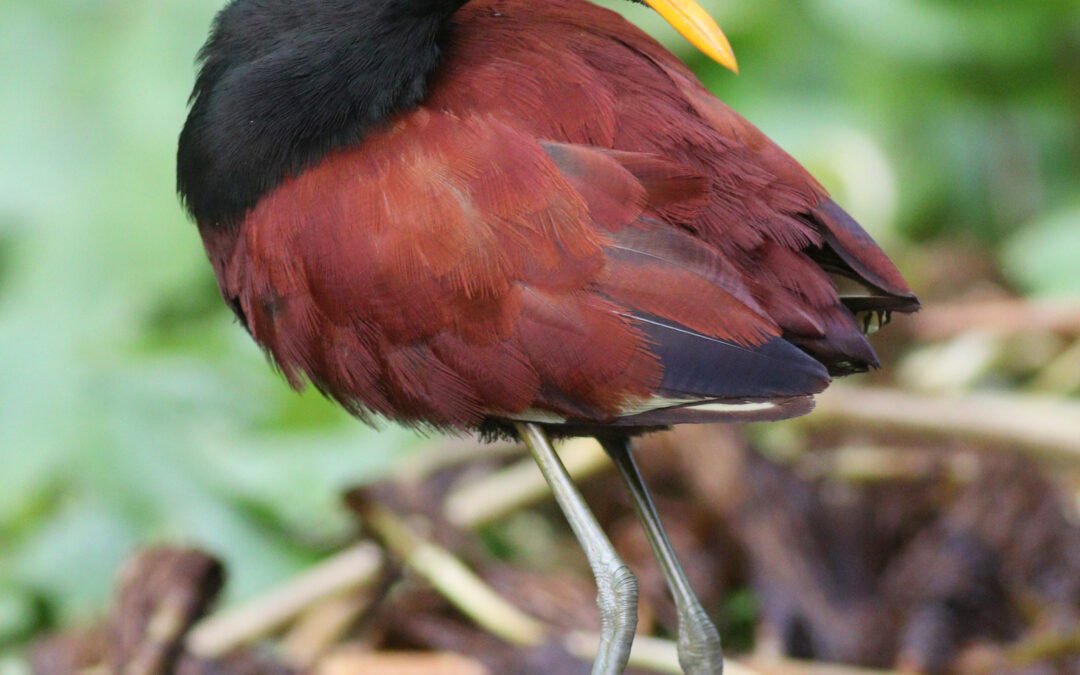
- https://commons.wikimedia.org/wiki/File:Northern_Jacana_Costa_Rica.jpg — Real source photograph used for the hero image (Wikimedia Commons).
- https://birdsoftheworld.org/bow/species/jacani1/cur/introduction — Long toes in the Jacanidae family and walking on floating vegetation.
- https://birdsoftheworld.org/bow/species/norjac/cur/introduction — The Northern Jacana and long-toe adaptation.
- https://animals.sandiegozoo.org/animals/jacana — Explanation of spreading weight over a wide area.
- https://www.audubon.org/field-guide/bird/northern-jacana — Movement on water lily leaves and floating vegetation.
- https://www.mentalfloss.com/science/physics/how-do-snowshoes-work — Surface area and pressure principle in snowshoes.
Image note: The hero image of this article is a real source photograph. The three in-article images were generated with AI from that real reference to illustrate the subject more clearly.