Discovery · Animals · Amphibians
Short Answer
Lungless salamanders, especially those in the family Plethodontidae, are salamanders in which adult gas exchange happens largely not through lungs but through extrapulmonary tissues such as the skin and the mouth-throat lining. For oxygen to enter the body, these surfaces must remain moist, diffusion distance must be short, and body size must fit this respiratory style. Modern studies investigate both the developmental basis of lung loss and certain proteins expressed in respiratory surfaces. A creature meeting a basic need like breathing through such delicate surface balances invites reflection on the measure placed inside small tissues.
Real observation video: you can watch a real salamander observation clip that supports the lungless salamander theme of the article.
What Are We Observing?
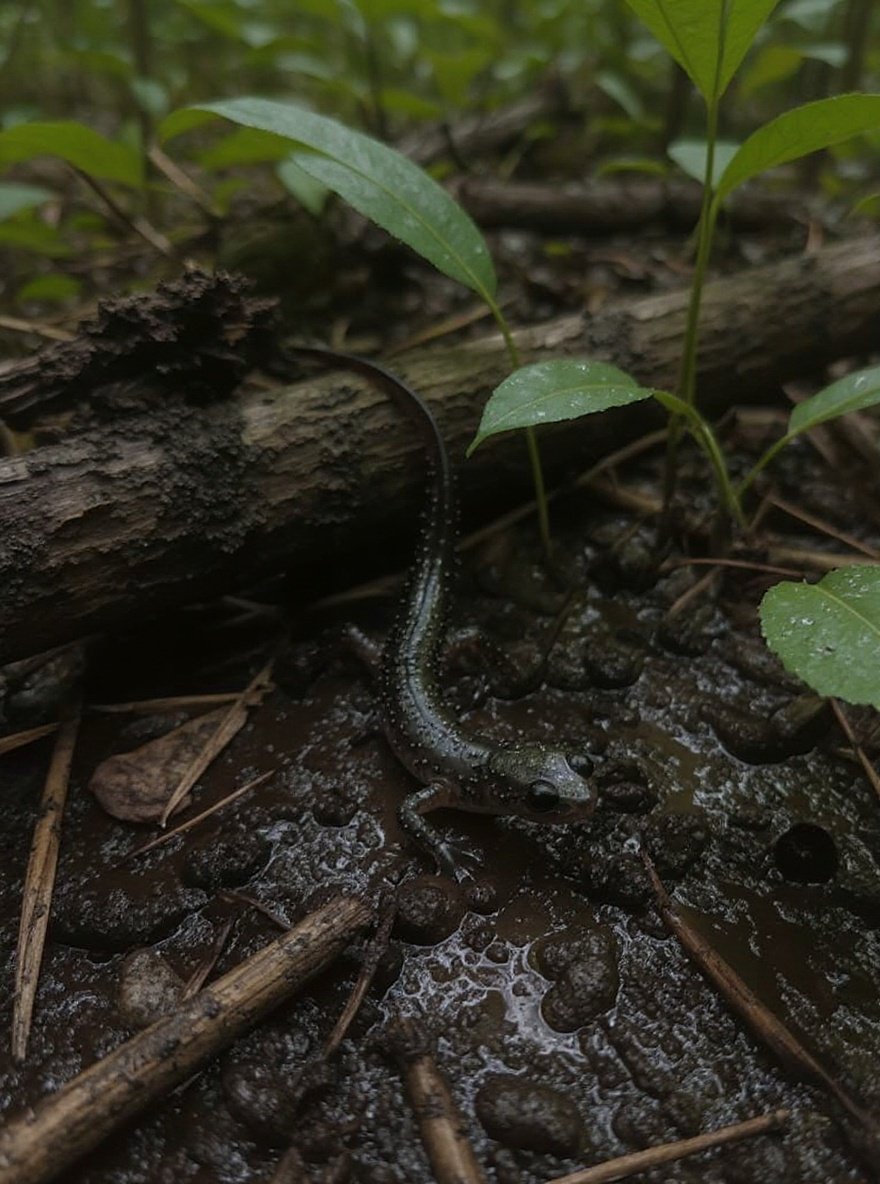
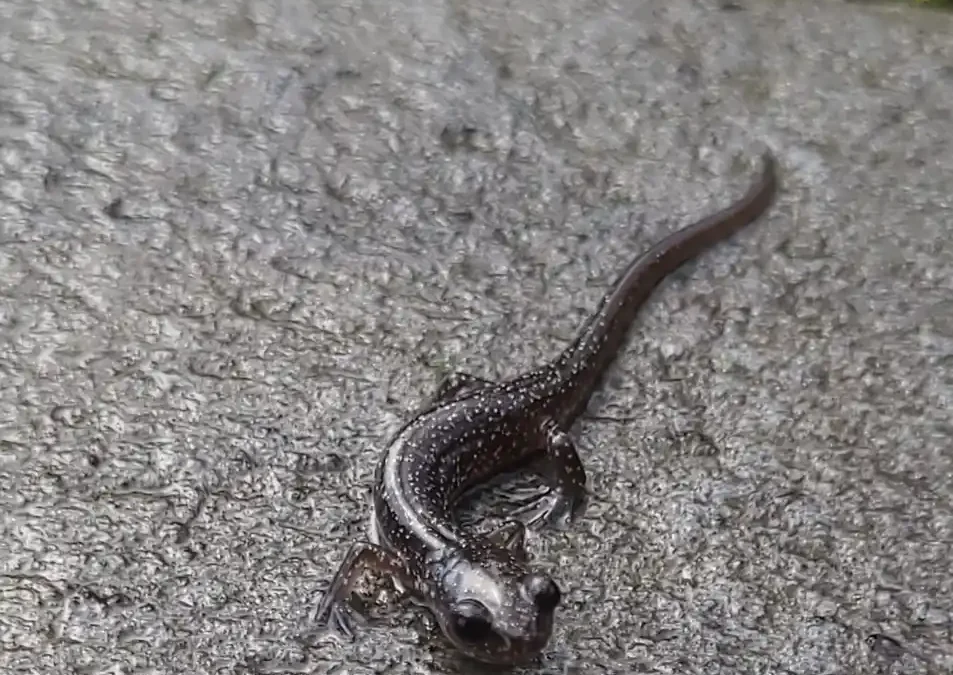
When we think of breathing, lungs usually come to mind. The chest expands, air enters, oxygen passes into the blood. Lungless salamanders disrupt that familiar picture. Adults have no lungs; instead, the skin and mouth-throat surface become the main stage of respiration.
For young readers, this opens a powerful question: if there are no lungs, how is oxygen taken in? The answer is simple but deep: gases can pass by diffusion across suitable moist and thin surfaces. But for this to work, the whole body must be suited to that limit.
The Science
A study in Science Advances explains that plethodontid salamanders are lungless as adults and that respiration occurs through the skin and buccopharyngeal mucosa. Buccopharyngeal mucosa means the moist tissues in the mouth and throat region. These surfaces must stay thin and moist for oxygen to pass into the blood.
Another study in the Journal of Experimental Biology investigates surfactant protein gene expression associated with extrapulmonary respiration regions in lungless salamanders. This does not mean “the skin became a lung” in a crude way. Rather, it shows that non-lung respiratory surfaces also deserve molecular-level study.
Limits matter here. Skin respiration does not work endlessly at every size or in every condition. Body size, activity level, environmental humidity, and surface area affect respiration. That is why the world of lungless salamanders is closely tied to moist microhabitats.
The “Wow” Moment
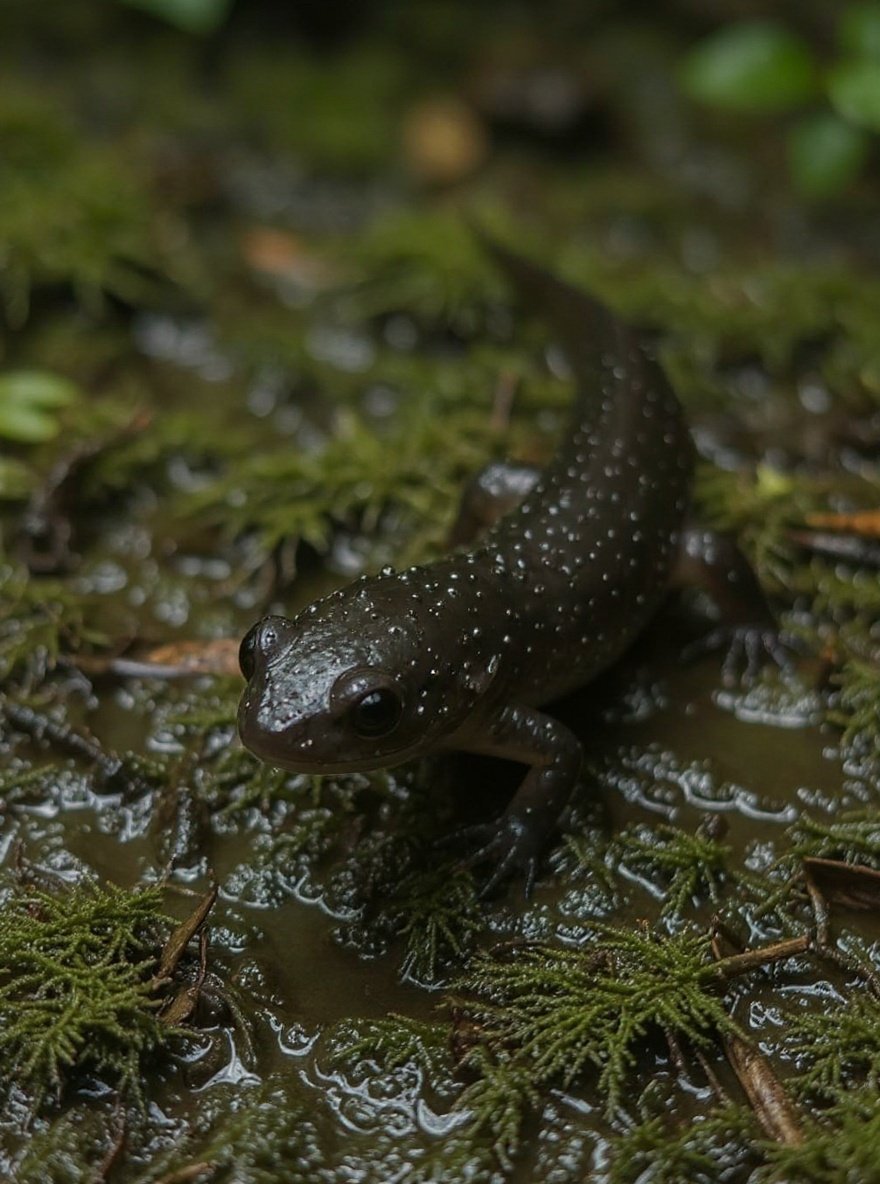
The wow point is this: breathing does not always have to be the work of one large organ. Under the right conditions, the whole body surface can become part of the task. Skin is not only an outer boundary; it becomes a gate for gas exchange between life and environment.
This is impressive to think about. Human skin is not enough for respiration, because body size, metabolism, and skin structure are different. But in some salamanders living in small, moist environments, the need is met through another arrangement. There is not one single solution; the structure given to a creature gains meaning together with its habitat and need.
What Humans Learned
This subject’s strongest link to human technology is in the area of “Moist Surface Gas Exchange and Micro-Respiration Systems”. But the similar engineering problem is clear: how can oxygen enter and carbon dioxide leave through a membrane or surface?
In artificial gills, membrane oxygenators, and breathable materials, the core questions are: how does a surface pass gas, manage liquid, avoid clogging, and work without harm? Lungless salamanders are a living example of this principle in nature, not a template that engineers simply copy.
This distinction matters. Discovery language does not exaggerate. Saying “a similar principle appears in human technology” is more honest than saying “scientists copied the salamander and made a device.”
Up Close
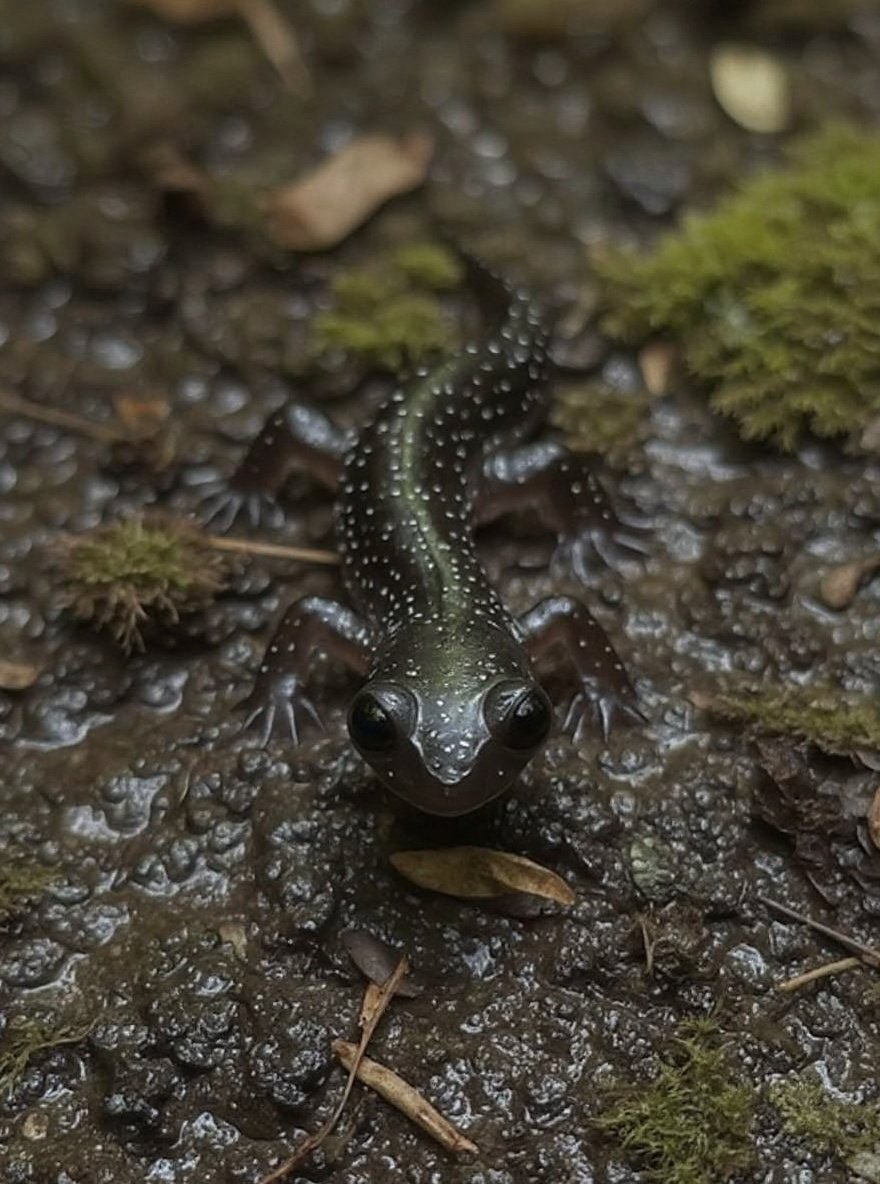
Imagine a window screen. Air can pass through, but large particles cannot. Now imagine that as a living, moist, far more complex surface. The skin of a lungless salamander is also a selective contact area between environment and body. Conditions that allow oxygen to pass must be preserved, while water loss and drying must be limited.
For this reason, moisture is not a luxury for these animals; it is part of respiration. A dry environment is not merely uncomfortable. It can also make the respiratory surface harder to use.
A Window for Reflection
Breathing seems ordinary to humans because it happens constantly. But the lungless salamander reminds us how delicate breathing really is. The thickness, moisture, surface area, and environmental relationship of a tissue can determine whether life continues.
The salamander did not place this respiratory order into its own body. It did not measure its skin and turn it into a gas-exchange surface by its own planning. In the created order given to it, a delicate system works by which life can continue even without lungs. Seen this way, breathing is not only a biological event; it becomes a quiet door of reflection on the measure and mercy Allah creates in living beings.
What It Tells Us Today
This topic tells us that even the most basic things require great order. Breathing looks easy, but behind it there are surfaces, moisture, blood vessels, diffusion, and environmental balance. In life, too, some blessings are unnoticed because they become ordinary. When we see an example outside the usual system, the greatness of that blessing appears again.
The lungless salamander shows the difference between looking and looking carefully. DuaMio Discovery exists to increase this careful attention: to keep the scientific information sound, then open the door of wonder it creates with calm reflection.
Discover, marvel, remember the Creator.
Sources
- https://commons.wikimedia.org/wiki/File:Amphibians_of_Russell_Cave_(c68b79a9-65b3-4564-b239-23c3a9afefce).jpg — Real source photograph used for the hero image (Wikimedia Commons).
- Lewis et al., 2022 — “Developmental basis of evolutionary lung loss in plethodontid salamanders”, Science Advances. Science Advances
- Lewis et al., 2018 — “Expression of a novel surfactant protein gene is associated with sites of extrapulmonary respiration in a lungless salamander”, Proceedings of the Royal Society B. Royal Society
- Harvard Gazette, 2019 — “Lungless salamanders’ skin expresses protein crucial for lung function”. Harvard Gazette
- Journal of Experimental Biology, 2018 — “A breath of fresh air for lungless salamanders”. JEB
- Yang & Cussler, 2000 — “Artificial gills”, Journal of Membrane Science. ScienceDirect
- Lee et al., 2018 — artificial gill oxygen extraction model, Sensors and Actuators A: Physical. ScienceDirect
Coming soon
Listen to these topics in the app, track your progress.
In the DuaMio app you’ll listen to every topic — not to memorize, but to comprehend.
Image note: The hero image of this article is a real source photograph. The three in-article images were generated with AI from that real reference to illustrate the subject more clearly.
Content note: This article was compiled with AI assistance based on reliable scientific sources and editorially reviewed before publication.