Discovery · Animals · Amphibians
Short Answer
In winter, the wood frog enters a state that can look almost like death from the outside: breathing stops, the heartbeat stops, and a significant part of the water in the body freezes. But this is not uncontrolled freezing. The inside of the cells is not torn apart by ice; ice forms mostly outside the cells and in spaces between organs.
During this time, the frog’s liver releases large amounts of glucose into the blood. Glucose, together with urea, works as a cryoprotectant — a freeze-protective substance. It helps prevent lethal ice formation inside cells, reduces dehydration stress, and supports organs as they begin working again after thawing.
So the phrase “antifreeze blood” is memorable, but incomplete. The real mechanism includes controlled extracellular ice formation, glucose and urea protection, extreme metabolic suppression, and the restart of organs during spring thaw. Turning deadly cold into a measured waiting state quietly makes a person say “wow.”
Real observation video: you can watch the frozen wood frog regain movement after thawing.
What Are We Observing?
When winter comes, the wood frog does not always sink to the bottom of a lake and stay underwater. It often remains under leaf litter, forest soil, and snow cover. When the temperature drops far enough, the body freezes. Ice begins at the skin and spreads through extracellular spaces. The heartbeat and breathing stop; the frog does not move.
Then spring arrives. The temperature rises. Ice melts. The heart starts beating again. Breathing returns. The frog moves again and can join the breeding season. This picture shows an order beyond what we usually mean by “freezing.”
Normally, ice formation in living tissue is lethal because ice crystals can damage cell membranes. In the wood frog, however, where ice forms and how cells are protected are carefully regulated.
The Science
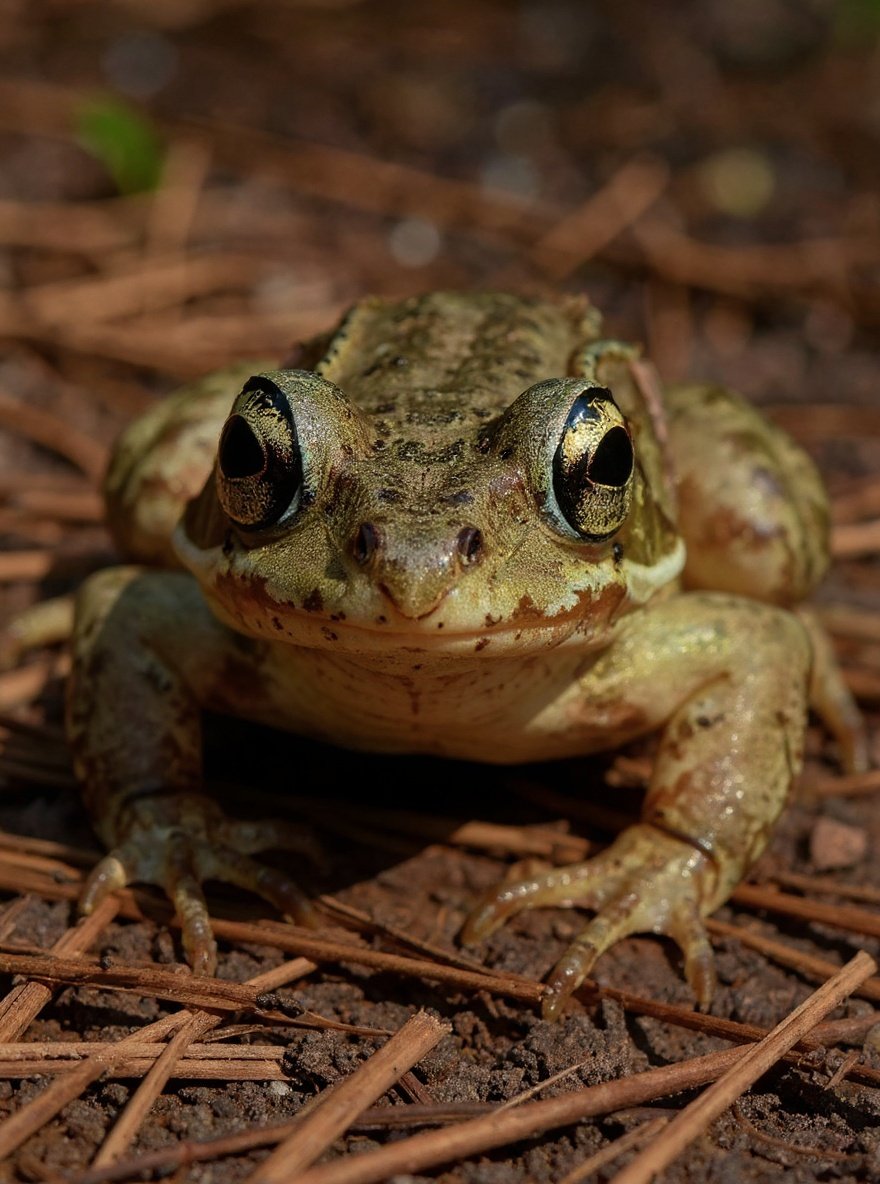
The first critical issue is the location of ice. If ice forms inside cells, serious damage can follow. In wood frogs, ice mostly forms in extracellular fluids and spaces between organs. Water is drawn out of the cells, helping keep the cell interior from turning into solid ice.
The second issue is cryoprotectants. When freezing begins, glycogen stored in the liver is rapidly broken down and large amounts of glucose are released into the blood. This glucose is transported into tissues. Urea also contributes to protection. Studies on subarctic wood frogs show that freeze-thaw cycles can increase cryoprotectant production and that some tissues can reach very high cryoprotectant concentrations.
The third issue is metabolic suppression. A frozen frog is inactive from the outside; energy use drops dramatically. Even when the heartbeat and breathing have stopped, low-level cellular protection and balance mechanisms continue.
The fourth issue is thawing. When spring warmth returns, ice melts. Circulation starts again. Organs gradually resume function. Thawing is as important as freezing, because cells must restore their water balance without being damaged.
The “Wow” Moment
The wonder is not simply that “the frog freezes.” The real wonder is that the deadly side of freezing is directed and managed.
If we freeze a glass of water, ice spreads everywhere. In living tissue, that is dangerous. In the wood frog, ice must remain mostly outside cells, glucose and urea must protect tissues, metabolism must slow almost to a stop, and then the whole system must restart in spring.
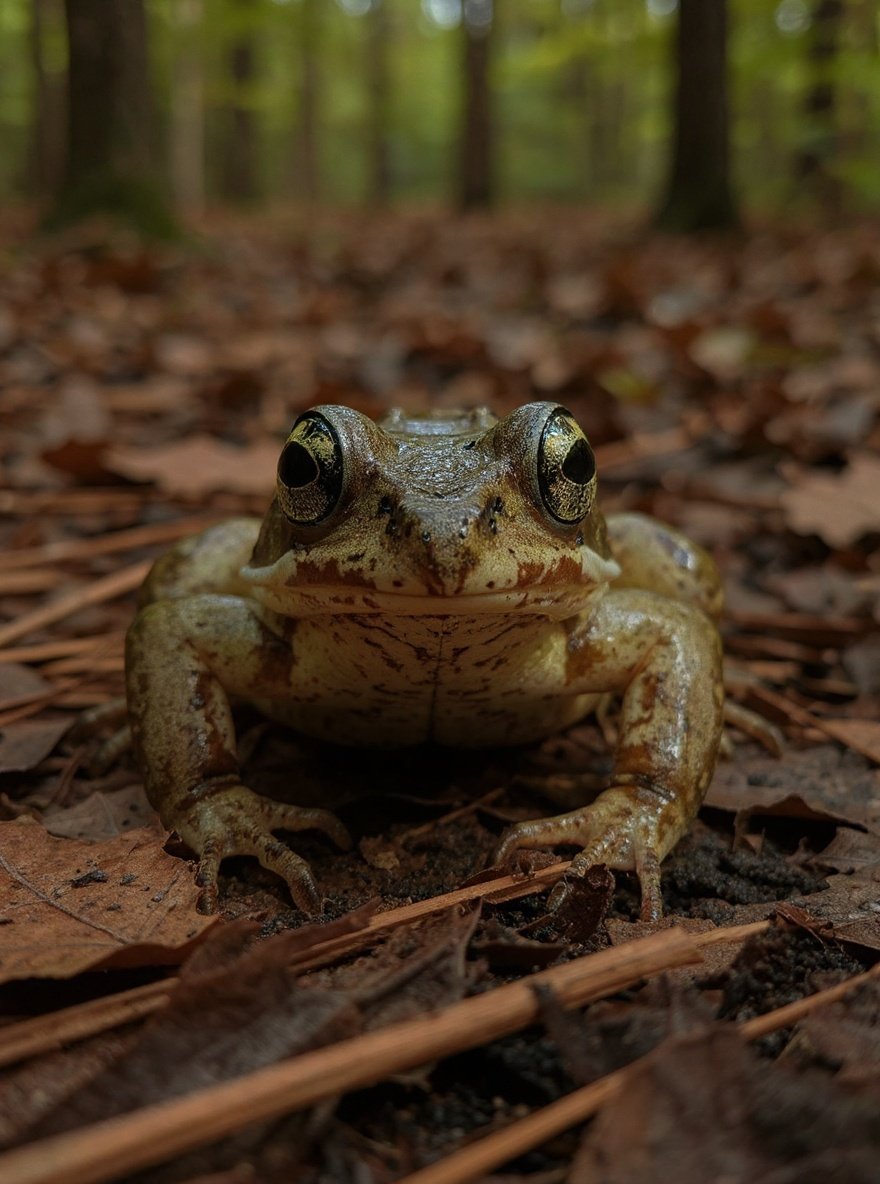
This is not a single switch. It is a set of many coordinated settings. If freezing happens too fast or in the wrong place, it can harm. If glucose production is insufficient, cells are not protected. If thawing is not balanced, organs may fail to recover. The system is not simply “resisting cold”; it turns cold into a protected waiting state.
What Humans Learned
The wood frog mechanism is especially important for organ cryopreservation. In organ transplantation, one of the major problems is that organs cannot be kept alive and functional for very long. If a heart, liver, or kidney is to be preserved, cells must be protected from damage.
Scientists study the wood frog to ask questions like:
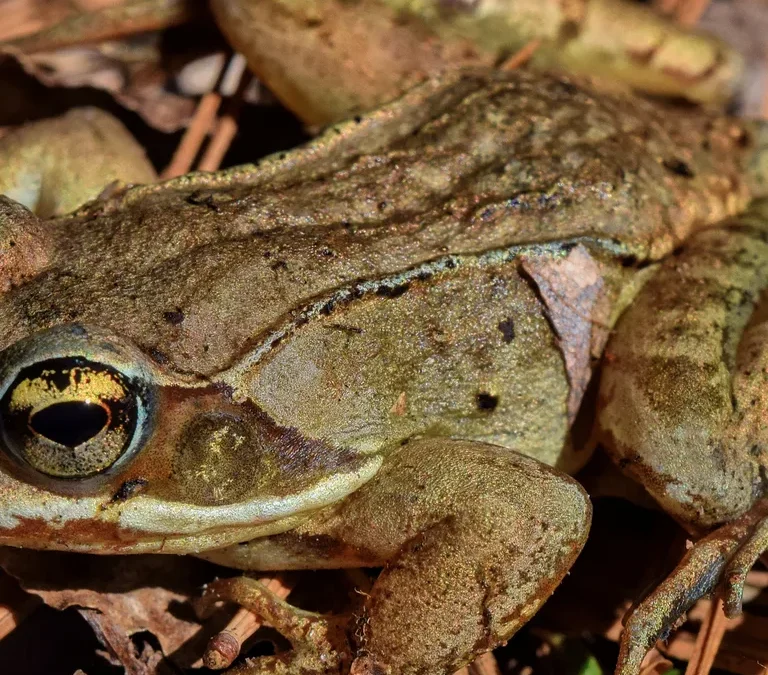
- https://commons.wikimedia.org/wiki/File:Lithobates_sylvaticus_(Woodfrog).jpg — Real source photograph used for the hero image (Wikimedia Commons).
- How can an organ be protected while ice forms?
- How can intracellular ice be prevented?
- How do glucose, urea, or similar substances protect cells?
- How is water balance managed during freezing and thawing?
- How can organs resume function afterward?
We should not exaggerate. Human organs are not currently frozen and thawed safely for months like wood frogs. This frog is not a ready-made technology; it is a powerful research model that offers valuable principles for organ preservation, biobanking, and transplantation research.
Up Close
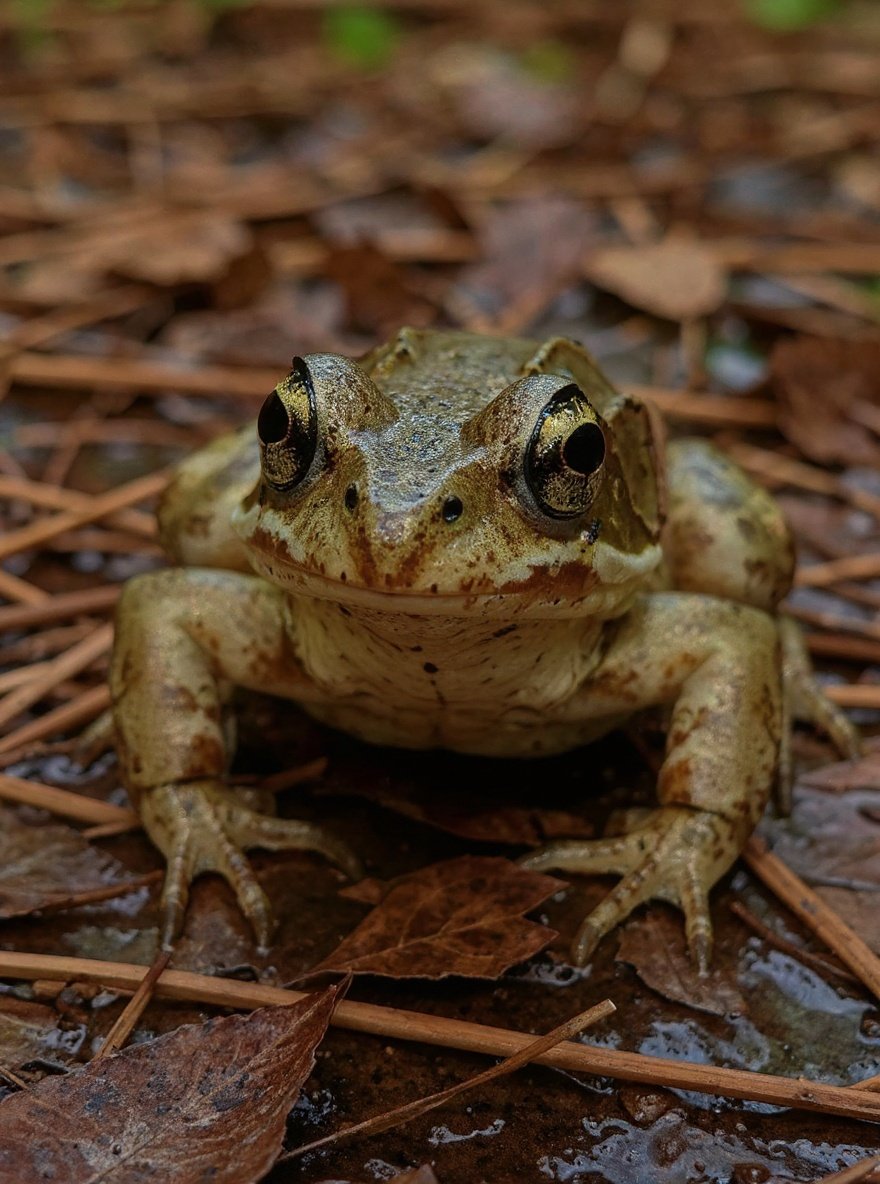
A wood frog does not make chemical calculations before winter. It does not think, “Now I will turn liver glycogen into glucose, use urea to protect my cells, and direct ice outside the cells.” It lives within a bodily order given to it.
Yet this order is so delicate that a situation that looks deadly becomes protected waiting. The heart stops, but the system does not collapse. Breathing stops, but cells remain protected enough to work again after thawing. Much of the body freezes, but not in the uncontrolled way that would tear the cells apart.
What we see in this small frog is not brute toughness against cold. It is a fine balance between water, sugar, urea, metabolism, and organ function.
A Window for Reflection
The wood frog is a dependent creature. It is not the one who planned winter, built the cryoprotectant system into its body, arranged ice to form outside rather than inside cells, or commanded the heart to restart in spring. All this order has been given to it.
To say “the frog achieved this” would miss the truth. The frog does not know glucose chemistry or how ice crystals damage cell membranes. Yet a protection system against these risks operates in its body. Wonder should be directed not at the frog itself, but at the measure visible in the frog.
Reflection is not merely being surprised that a frozen body moves again in spring. It is asking, “To whom belongs this delicate water balance, this timed chemical protection, and this careful thawing order?” That question moves the gaze from the work to the One who placed the order.
What It Tells Us Today
The wood frog shows how life depends on delicate balances. The same ice can be death in the wrong place, and protected waiting in the right place and measure. The same cold can destroy when uncontrolled, and become part of winter survival when a protection system is placed in creation.
When a person looks at this creature, they see both the depth of science and their own dependence. While modern medicine still searches for better ways to freeze and thaw organs safely, principles that illuminate that field operate in the body of a small frog.
This scene reminds us: life continues not only through warmth, but through measure, timing, protection, and wisdom.
Discover, marvel, remember the Creator.
Sources
- Costanzo, Lee et al., PLOS ONE, 2015. PLOS ONE
- Costanzo & Lee, Journal of Experimental Biology, 2005. PubMed
- Costanzo et al., 2016. PubMed
- Al-attar & Storey, 2022. ScienceDirect
- Pfizer. Pfizer
Coming soon
Listen to these topics in the app, track your progress.
In the DuaMio app you’ll listen to every topic — not to memorize, but to comprehend.
Image note: The hero image of this article is a real source photograph. The three in-article images were generated with AI from that real reference to illustrate the subject more clearly.
Content note: This article was compiled with AI assistance based on reliable scientific sources and editorially reviewed before publication.