“Why don’t women attend the Friday prayer?” or “Why can’t women lead men in prayer?” are questions often understood as a deprivation — as if Islam pushes the woman away from worship, from the mosque, or from the sphere of religious representation. Yet in Islamic jurisprudence this is not a matter of superiority and inferiority.
Here the DuaMio Wisdom approach does this: first it clarifies the ruling, then it shows the context, then it carries the wisdom into language today’s reader can understand.
Short answer: an exemption, not a ban; a responsibility, not a rank
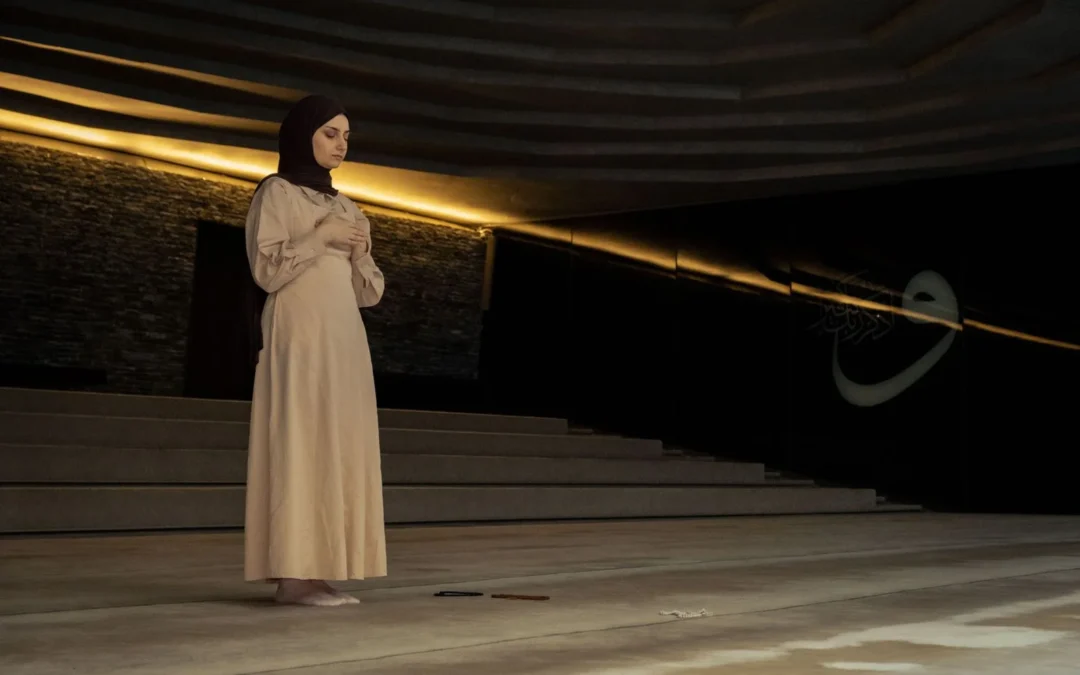
The Friday prayer is not obligatory upon women; but if they attend, their prayer is valid. A woman who joins the Friday prayer does not have to pray that day’s noon prayer separately. So what is at issue is not a ban but an exemption.
On the question of leading prayer, a woman leading other women has been assessed differently across the schools of law; a woman leading men, however, was not deemed permissible in classical jurisprudence. This ruling is not about a woman’s spiritual deficiency but about the privacy, focus (khushû), and order of the congregation. Leading prayer is not a rank; it is a heavy responsibility.
The ruling layer: the Friday prayer is not obligatory upon a woman
According to the sources, the Friday prayer is obligatory upon Muslim men who are sane, of age, healthy, free, and resident. As related in the sources, the Prophet stated this exemption openly:
“The Friday prayer is an obligation upon every Muslim, except a woman, a child, and a slave.”
This does not mean “a woman cannot pray the Friday prayer”; if a woman goes to the mosque and prays it, her prayer is valid. The difference here is not a prohibition but the lifting of an obligation. In jurisprudence this rests on the principle of “nafy al-haraj” — the removal of hardship and difficulty: the religion does not place a person under a burden they cannot carry.
The four Sunni schools — Hanafî, Mâlikî, Shâfiî, and Hanbalî — agree that a woman’s attendance at Friday prayer is not an individual obligation (fard ayn) but optional. The difference between them is only at the level of recommendation: the Hanafîs often regard a woman’s worship at home as more meritorious, while the Shâfiîs recommend that a woman not be prevented from going to the mosque if there is no fear of temptation (fitna). Imâmî (Shia) jurisprudence likewise defines Friday prayer for a woman not as an obligation but as a dispensation. So, contrary to what the modern mind assumes, “not being obligatory” here is not a devaluation but an easing (takhfîf).
The ruling on leading prayer: why is leading men different?
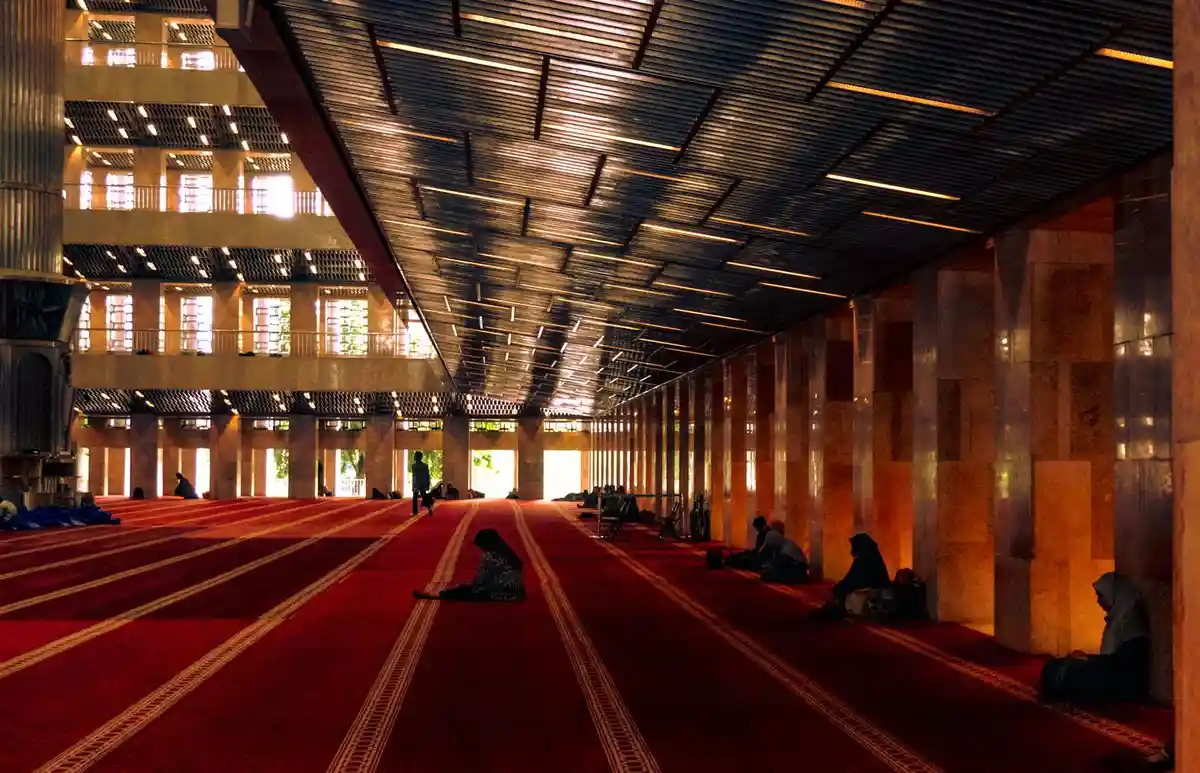
According to the sources, a woman leading a congregation of women has been assessed differently across the schools: the Shâfiî and Hanbalî schools deem it permissible — even recommended — provided it is only among women, while the Hanafîs consider it disliked (makrûh), and the Mâlikîs hold that a woman cannot be an imam at all, even for women. But a woman leading men has not been accepted by any school. The basis of this ruling is the following caution related in the sources:
“No woman shall lead a man in prayer.”
At the center of this ruling is not the woman’s worth but the preservation of the prayer’s focus, privacy, and order in a mixed congregation. Prayer involves bodily movements such as bowing and prostration; a woman standing in front of a male congregation was seen as contrary to the focus and privacy of the worship. In jurisprudence the imam is, in effect, a guarantor for the prayer of the congregation behind him; so leading prayer is not a privilege but the taking on of responsibility.
From the Age of Ignorance to the Age of Bliss: a revolution in the woman’s status
To understand these rulings correctly, we must recall where Islam took the woman from and to. In the pre-Islamic Age of Ignorance (Jâhiliyya) baby girls could be counted a disgrace and buried alive, and a woman was often seen as inherited property, a commodity to be bought and sold. After that dark era, Islam granted the woman a wholly new and exalted (muallâ) status: the security of her life, the right to own property, to inherit, not to be married without her consent, and to be an individual with her own personhood.
According to the sources, in the Age of Bliss mosques were not only places of prayer but centers of education, consultation, and social life. Women attended the daily, Friday, and festival prayers and received religious education in the Prophet’s Mosque. This picture refutes the claim that “Islam removed the woman from the mosque entirely.” The problem is not in the religion itself but in the fact that, in later periods, spaces where women could worship comfortably (separate sections, suitable architectural arrangements) were not sufficiently considered.
The prayer rows and privacy
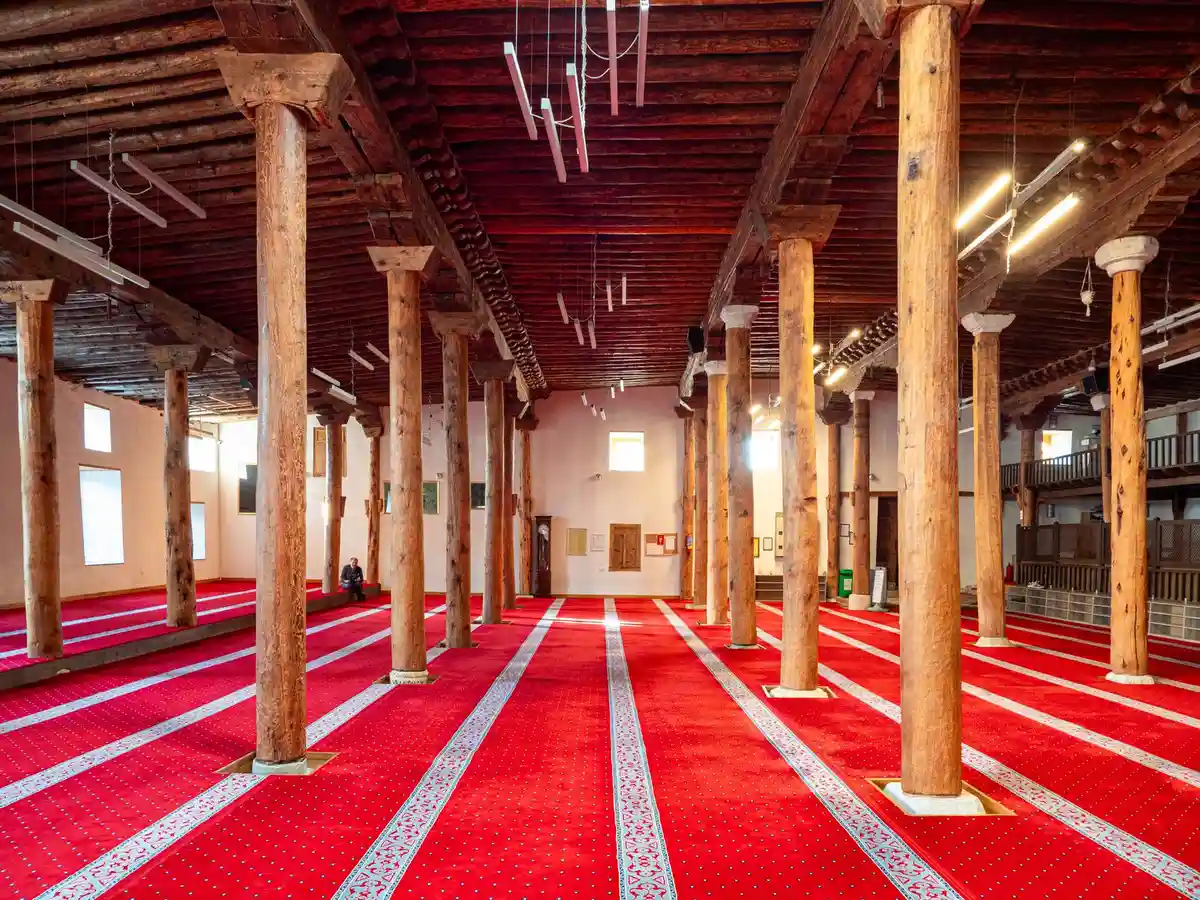
The arrangement of the prayer rows, by the Prophet’s practice, was ordered as men first, then children, and women at the back. This is not a ranking of worth. Indeed, this arrangement is expressed in a hadith:
“The best of the men’s rows is the first and the least is the last; the best of the women’s rows is the last and the least is the first.”
This order was set this way not because the woman is left behind, but on the contrary to preserve privacy. Prayer is not a display of protocol but an act of focused devotion; a woman standing at the back does not mean her spiritual rank is behind. Nearness to God is not about one’s place in the row but about God-consciousness (taqwâ). In fact, in Hanafî jurisprudence a woman and man standing side by side in the same line (muhâzât al-nisâ) can, under certain conditions, affect the validity of the prayer — so the row arrangement is a technical etiquette that guards the focus of worship. Even a woman who leads a congregation of women does not step forward but stands in the middle of the row — a reflection of this delicacy of privacy.
Is leading prayer a station of superiority?
In the modern perception, “going to the front” is often understood as a sign of power and status. But in Islam, leading prayer is not a rank; it is a responsibility. The imam directs the congregation’s prayer; if he errs, he affects the order of the congregation’s worship. This heavy responsibility is not a sign of superiority but a station of service and burden. The same logic applies to the sermon (khutba) and public religious representation: all four schools require the one delivering the sermon to be male, and communal obligations such as Friday prayer and jihad were apportioned to men. This is not a deficiency in the woman’s scholarly or spiritual perfection but a division of labor based on the sharing of family and social responsibilities.
The woman’s field of knowledge and guidance
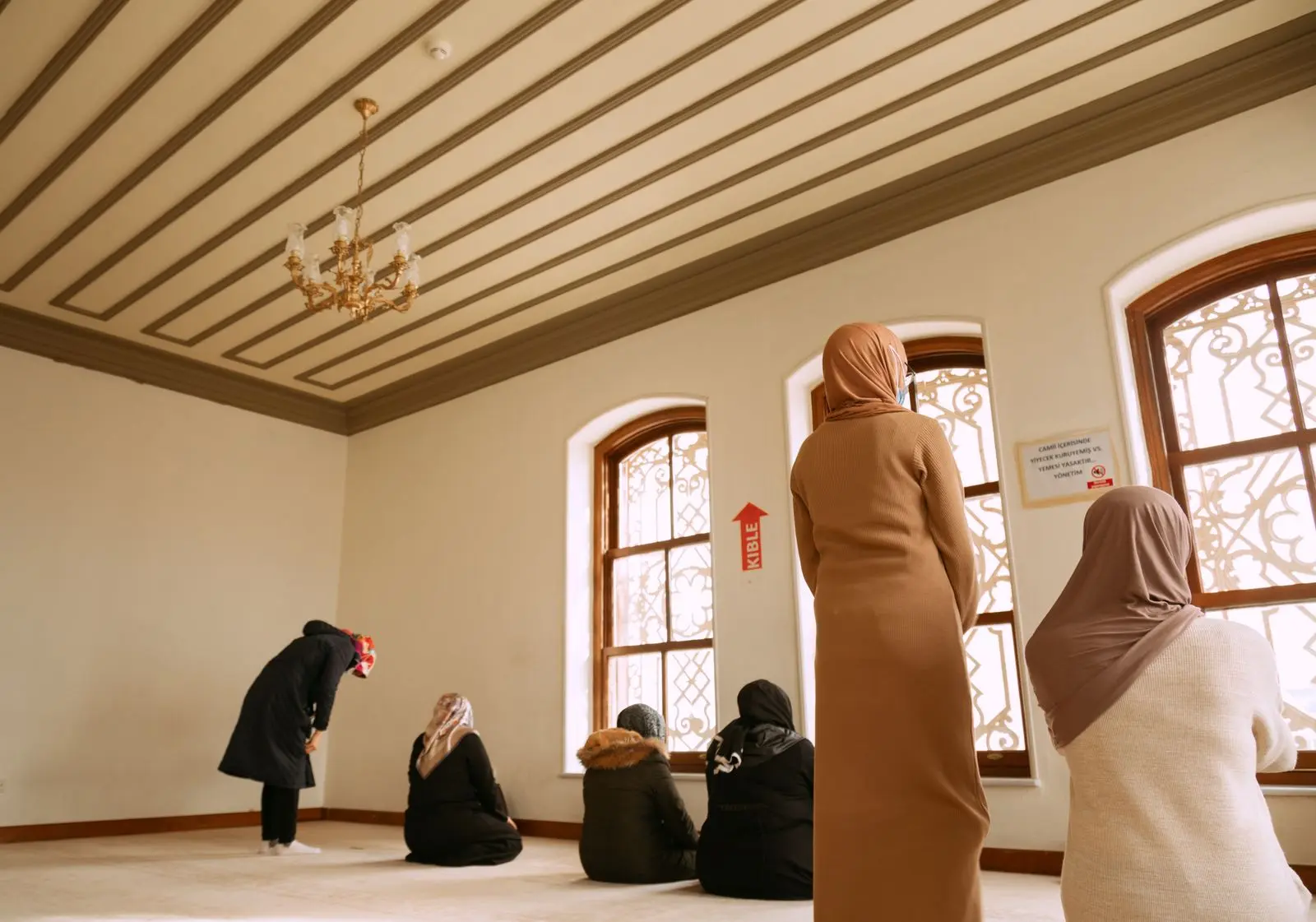
That a woman does not lead men in prayer does not mean she cannot learn religious knowledge, teach it, or express an opinion. According to the sources, the legitimacy of the woman in the field of guidance and education is clear. As in the example of Aisha, women became authorities in the religious sciences, taught the Companions, transmitted legal verdicts, and shaped the knowledge of the community. The sources openly recognize a woman’s intellectual leadership, her scholarly authority, and her right to object even to a caliph when needed.
So the matter is not “the woman is excluded from religious life.” The matter is the preservation of the form of worship within its own rules of privacy and order; the forms of representation may differ, but the measure of worth is still God-consciousness, knowledge, and responsibility.
Today’s perspective
Today’s debates often begin from the assumption that “if a woman does not do the same thing as a man, she is seen as worthless.” Yet Islam does not make man and woman identical. According to Islam, the woman is not a deficient version of the man, nor is the man a more developed form of the woman. The two are equal halves of a single whole, completing one another (shaqîq). To force a human being into a mold that does not suit their nature is not to grant them equality; it is to push them into conflict with their own nature.
That the Friday prayer is not obligatory upon a woman does not diminish her; it lightens her burden. That she does not lead men in prayer does not devalue her; it preserves the privacy order of the prayer. A woman can learn knowledge, work, contribute to the guidance of society, worship, and go to the mosque; only in certain forms of worship are responsibility and order set differently, in keeping with human nature.
Common misunderstandings
1. “Women are forbidden to attend the Friday prayer.”
No. It is not obligatory; but if they attend, their prayer is valid and takes the place of that day’s noon prayer.
2. “A woman is seen as worthless because she cannot be an imam.”
No. Leading prayer is not superiority; it is a heavy responsibility tied to the order of the congregation — and a woman can lead her own congregation of women.
3. “Islam keeps the woman away from the mosque.”
No. In the age of the Prophet women attended the mosque and received religious education.
Summary
That the Friday prayer is not obligatory upon women is not a deprivation but an exemption. That a woman does not lead men in prayer is not a spiritual deficiency but is tied to the privacy and order of worship. In Islam the measure of worth is not standing at the front, delivering the sermon, or holding an office; it is servanthood to God, God-consciousness, and carrying responsibility rightly.
The question is not: “Does Islam keep the woman away from worship and the mosque?”
The real question is:
“Is the lifting of a burden a deprivation, or is the real deprivation being forced to carry that burden?”
DuaMio Wisdom Series
Wonder. Understand. Live.
Coming soon
Listen to these topics in the app, track your progress.
In the DuaMio app you’ll listen to every topic — not to memorize, but to comprehend.
Image note: The images in this article are license-cleared stock images chosen to suit the subject. Each image’s source and license are noted in its media description.
Content note: This article was compiled with AI assistance based on reliable sources; Quran verses are quoted verbatim from the approved translation (Sahih International for English), and the article was reviewed editorially and for religious sensitivity before publication.