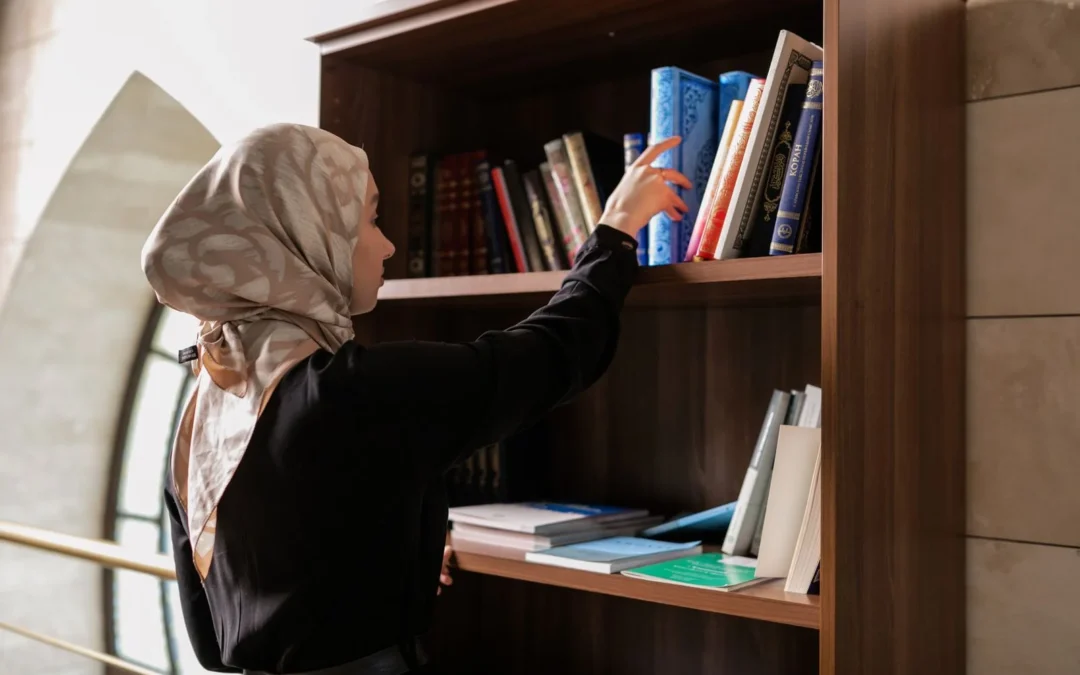
Today the hijab is usually argued between two extremes. One side sees it only as a symbol of oppression; another side never explains its wisdom and is content to say “the command is simply this.” Yet the matter cannot be understood correctly until it is read together with its layers of ruling, context, and wisdom.
Here the DuaMio Wisdom approach does this: first it clarifies the ruling, then it shows the context, then it carries the wisdom into language today’s reader can understand.
Short answer: God’s command, not a man’s pressure
Modest covering is not a pressure imposed by men on women; it is directly a command of God. It rests on Surah An-Nûr 31 and Surah Al-Ahzâb 59, so the matter cannot be read at the level of “men wanting to cover women.”
Moreover, Islam places the same measure on men too: they are commanded to lower their gaze and guard their chastity. So covering is not a one-sided burden placed only on women; it is part of a mutual ethical system that establishes privacy, dignity, and chastity in society. At the same time it is a shield of chastity that protects the woman from a gaze that consumes her through her body and brings her personality to the foreground.
The ruling layer: An-Nûr 31 and Al-Ahzâb 59
In Islam, modest covering is accepted as obligatory by the consensus (ijmâ) of exegetes, hadith scholars, and jurists. This ruling rests first on Surah An-Nûr, verse 31 (24:31):
“And tell the believing women to reduce [some] of their vision and guard their private parts and not expose their adornment except that which [necessarily] appears thereof and to wrap [a portion of] their headcovers over their chests…”
— Surah An-Nûr, 24:31 (Saheeh International — quran.com)
Surah Al-Ahzâb, verse 59 (33:59) completes the same frame and states its wisdom openly:
“O Prophet, tell your wives and your daughters and the women of the believers to bring down over themselves [part] of their outer garments. That is more suitable that they will be known and not be abused. And ever is Allah Forgiving and Merciful.”
— Surah Al-Ahzâb, 33:59 (Saheeh International — quran.com)
The verse itself shows the purpose: the covering is so that the woman “will be known and not be abused.” So the ruling is not an instrument of domination; it is an order of security that protects the woman from a hurtful gaze and from harassment.
The context layer: as woman was reduced to a body, Islam gave her personhood
In pre-Islamic society woman was often bought and sold, deprived of inheritance, sometimes a girl could be buried alive, and she could be seen as a sexual object. According to the sources, women of that age could move about with their necks and chests left exposed.
Islam lifted the woman out of this position and gave her legal, moral, and spiritual worth; modest covering is part of that transformation. It moves her from being seen merely as a “body” to being positioned as a “person.”
One more detail matters: according to the sources, the command of covering came not in Islam’s earliest days but gradually, around the fifth year after the migration, once hearts had been shaped by the belief in God’s oneness. Islam first built faith and the consciousness of servanthood, then established the measures of social life. Indeed, when the verses were revealed, the Muslim women of Medina obeyed the command without hesitation. Nor is the headcovering an entirely new practice unique to Islam; according to the sources, it was also known in Christianity and Judaism as a sign of modesty and dignity.
The wisdom layer: not seeing the woman as merely a body
The most basic wisdom of modest covering is that it makes the woman’s worth visible not through a display of her body but through her personality, mind, morals, and dignity. In this respect the covering is a quiet but powerful sentence: “Judge me by my character, not by my body.”
Around this wisdom there are a few more axes:
Limits and practice: not one uniform, the measure is privacy
According to the sources, a free woman is to cover her body except the hands, the face, and—according to some views—the feet. The covering is expected to be loose enough not to reveal the shape of the body and not so thin as to show what is beneath.
This does not mean an obligation of one uniform garment (a chador, etc.); the basic measure is the preservation of privacy. The spirit of covering is not only cloth but dignity and God-consciousness. There are also different rulings in special acts of worship: for example, a woman keeps her face uncovered in the state of ihram for the pilgrimage, which shows that Islam sets measured and flexible rulings according to circumstances.
The question of will: compulsion does not make covering “covering”
At the heart of this whole debate is one question: is the covering a choice or an imposition? Islam’s answer is clear: acts of worship rest on intention and will. The Qur’anic principle “there is no compulsion in religion” (2:256) applies here too; a covering forced onto a woman carries no spiritual value as long as it does not come from the heart. True modest covering is the woman saying, by her own will, “I choose this for God.” In this respect the covering is the sign not of an external pressure but of an inner surrender.
This turns the question of “oppression or freedom” on its head. In modern thought, freedom is often imagined as “living out every desire without limit.” Yet being enslaved to every craving of the self can also be a kind of dependence, a kind of bondage. According to Islam, true freedom is for a person to be the master of a conscious will rather than of their desires. The covering is a quiet declaration of the bond the woman builds with God through that will. This is why both forcing a woman to cover and forcing her to uncover usurp that will in equal measure; both strip the woman of her own choice.
Today’s perspective: oppression or freedom?
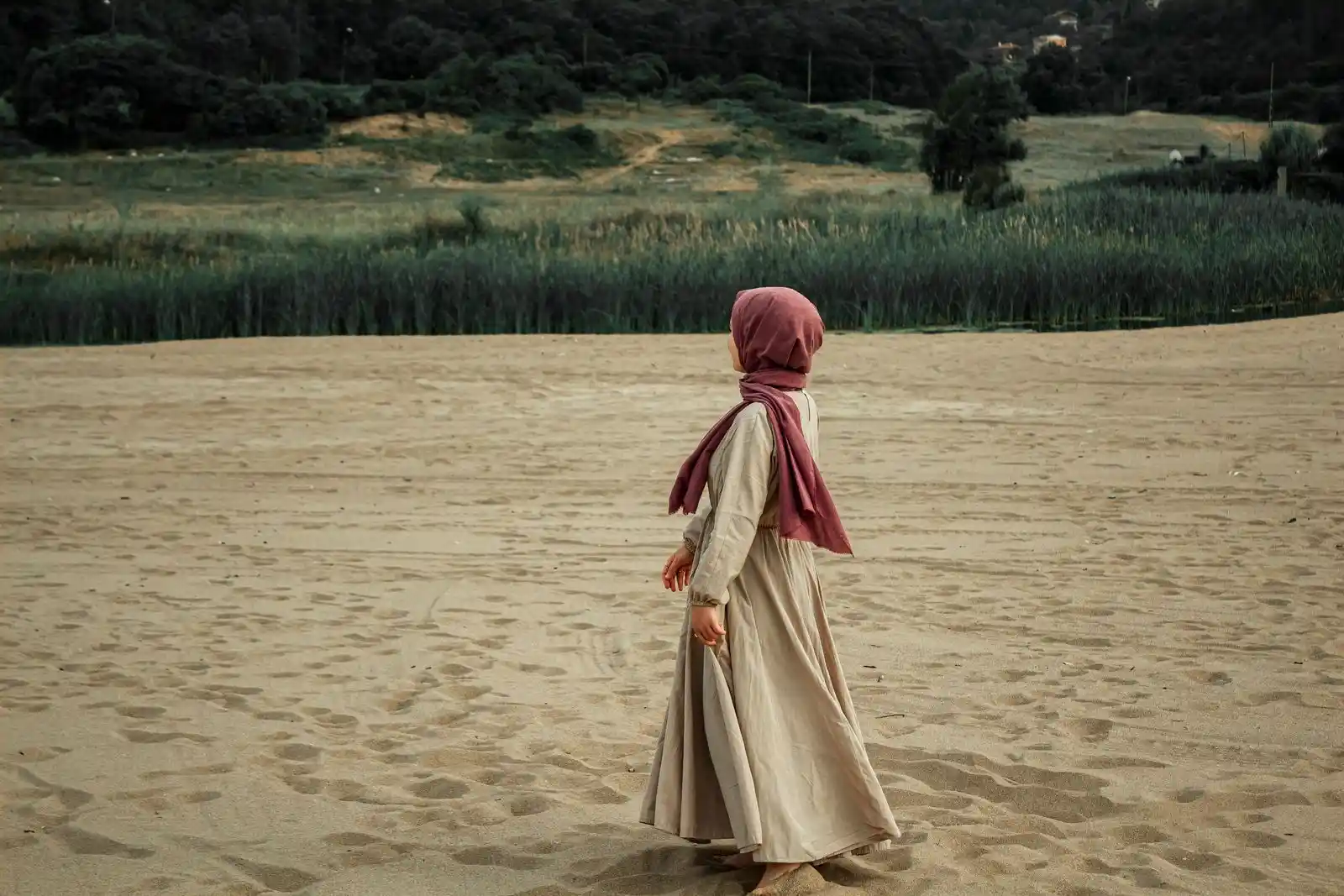
Modern criticisms often present the hijab as “an oppression that restricts the woman.” But the real question is this: does a system that constantly evaluates the woman through beauty, youth, body, and attractiveness really offer freedom?
According to the sources, modest covering is a dignified stance that protects the woman from being a display case and an item of consumption. It exists not to cut the woman off from social life but so that she can exist in social life with her personality. Islam is not against a woman learning, working, and taking part in society; the measure is the preservation of chastity and privacy. Indeed, in the age of the Prophet women taught, joined councils of consultation, and took part in social life.
Common misunderstandings
1. “The hijab is male pressure.”
No. Covering is God’s command, and the same responsibility of chastity is placed on men as “lowering the gaze.”
2. “A covered woman is cut off from social life.”
No. Islam does not close the fields of knowledge, work, and social contribution to the woman; it orders them in a measured and dignified way.
3. “The hijab devalues the woman.”
No. On the contrary, it moves the woman from being seen merely as a body and brings her personality to the fore.
Summary
Modest covering is not merely a matter of clothing. As a ruling it is God’s command; as a context it is a transformation that lifted the woman out of the objectifying gaze of the pre-Islamic age; and as wisdom it is a protection of chastity, trust, dignity, and personhood. And in its essence it is not an external imposition but a choice taken up by free will.
The question is not: “Why does Islam force the woman to cover?”
The real question is:
“Is a woman’s worth measured by how much of her body is seen, or by how much of her personhood is protected?”
DuaMio Wisdom Series
Wonder. Understand. Live.
Coming soon
Listen to these topics in the app, track your progress.
In the DuaMio app you’ll listen to every topic — not to memorize, but to comprehend.
Image note: The images in this article are license-cleared stock images chosen to suit the subject. Each image’s source and license are noted in its media description.
Content note: This article was compiled with AI assistance based on reliable sources; Quran verses are quoted verbatim from the approved translation (Sahih International for English), and the article was reviewed editorially and for religious sensitivity before publication.