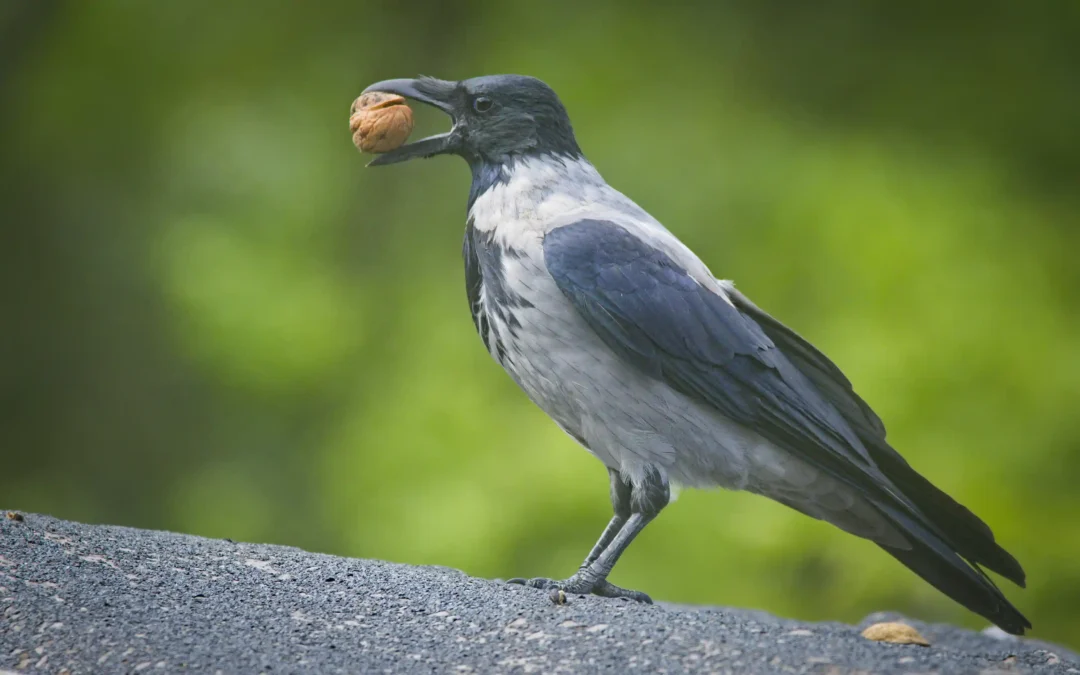
Discovery > Animals > Birds
Short Answer
Some crows use the physical possibilities around them to reach hard-shelled food: height, hard ground, impact, and sometimes the road surface of a city can all become part of the same problem.
The wonder of this behavior is that the walnut is not only “food”; it is a mechanical challenge. When the crow’s body strength is not enough, surfaces and conditions in the environment may become part of the solution.
Observation video: Watch urban crows use road surfaces and the traffic environment while trying to open hard nuts.
What Are We Observing?
Think of a walnut: a hard outside, protected food inside. Even for a person, that shell may require a nutcracker or a stone. For a small bird, it is a serious obstacle. A crow tests it with its beak, carries it, drops it, and tries again. When the walnut hits the ground, the physics of the problem becomes clear: a hard shell, a hard surface, and enough impact.
In a city, the scene becomes even more interesting. Trees, power lines, sidewalks, asphalt roads, and at times the extra force created by vehicles exist in the same environment. For a crow, a road is not only a place of passage; it is a wide, hard, flat surface. In some places, walnuts are dropped from a height onto roads. In some situations, the road and traffic effects may help the shell open.
The striking point is that the bird does not use its environment as a passive background. The crow’s food-seeking behavior can be shaped together with the physical properties of the place where it lives.
The Science
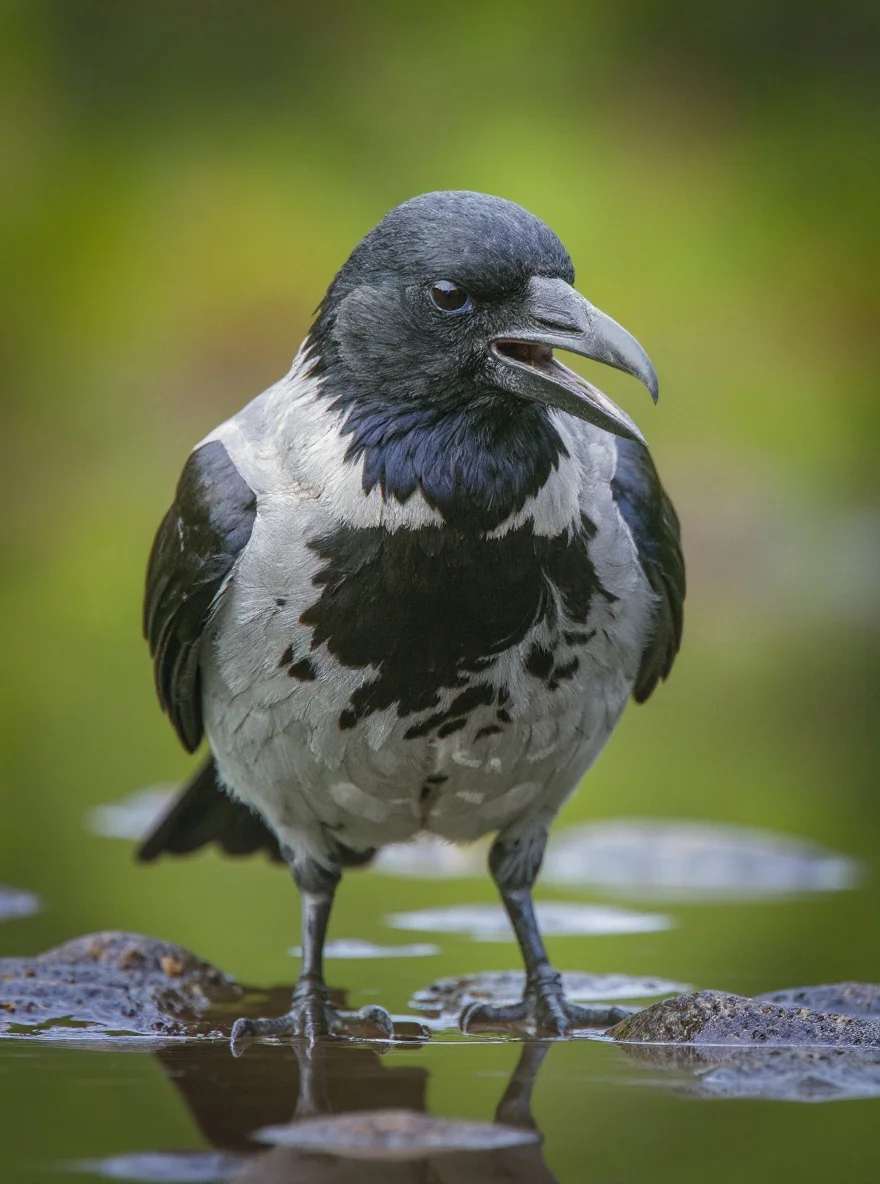
Observations of carrion crows in Japan show that nut-cracking behavior can take different forms in urban environments. In Sendai, crows have been reported placing walnuts in front of cars stopped at traffic lights. In the Hakodate study, crows were often seen dropping walnuts from electric lines onto roads. Read together, these observations show that the behavior does not fit one fixed pattern: hard surface, height, dropping, learning environment, and local conditions can combine into different solution paths.
A study based on observations in Davis, California, makes the mechanical core of the picture clearer: many birds, including at least six corvid species, can drop hard-shelled food onto hard surfaces to open it. This helps explain why the road surface matters so much. Asphalt or concrete acts like a broad impact surface against the shell. In some conditions, vehicles may add extra cracking force; yet the central mechanism often remains the use of a hard surface.
The wider problem-solving ability of corvids also gives this scene more meaning. In New Caledonian crow studies, some individuals have shown tool use, step-by-step problem solving, and choices that respond to the structure of a physical task. These findings do not directly explain the road-and-walnut behavior; they simply help show why corvids attract scientific attention for using environmental cues, adjusting through trial, and searching for flexible solutions to physical obstacles.
The “Wow” Moment
The wonder is that the crow does not only struggle with the walnut using its beak; it solves the problem together with the environment. The walnut is hard. The road is hard. Height creates impact. The ground pushes back against the shell. Sometimes moving elements of the city add another force to the scene. A small bird can try different ways to reach food inside this physical setup.
This wonder does not need the claim that “a crow plans like a human.” There is a simpler and stronger wonder: a living creature can adjust its behavior by making use of possibilities in the place where it lives. A branch, a power line, a curb, or an asphalt surface can each gain a different meaning on the path to provision.
It also reminds us that intelligence in nature is not only a hidden calculation inside the brain. Body, environment, material, and habit work together. Problem solving is sometimes not only about “holding an idea in mind,” but about finding the right surface, trying the right height, and acting again according to the result.
Inspired by Nature
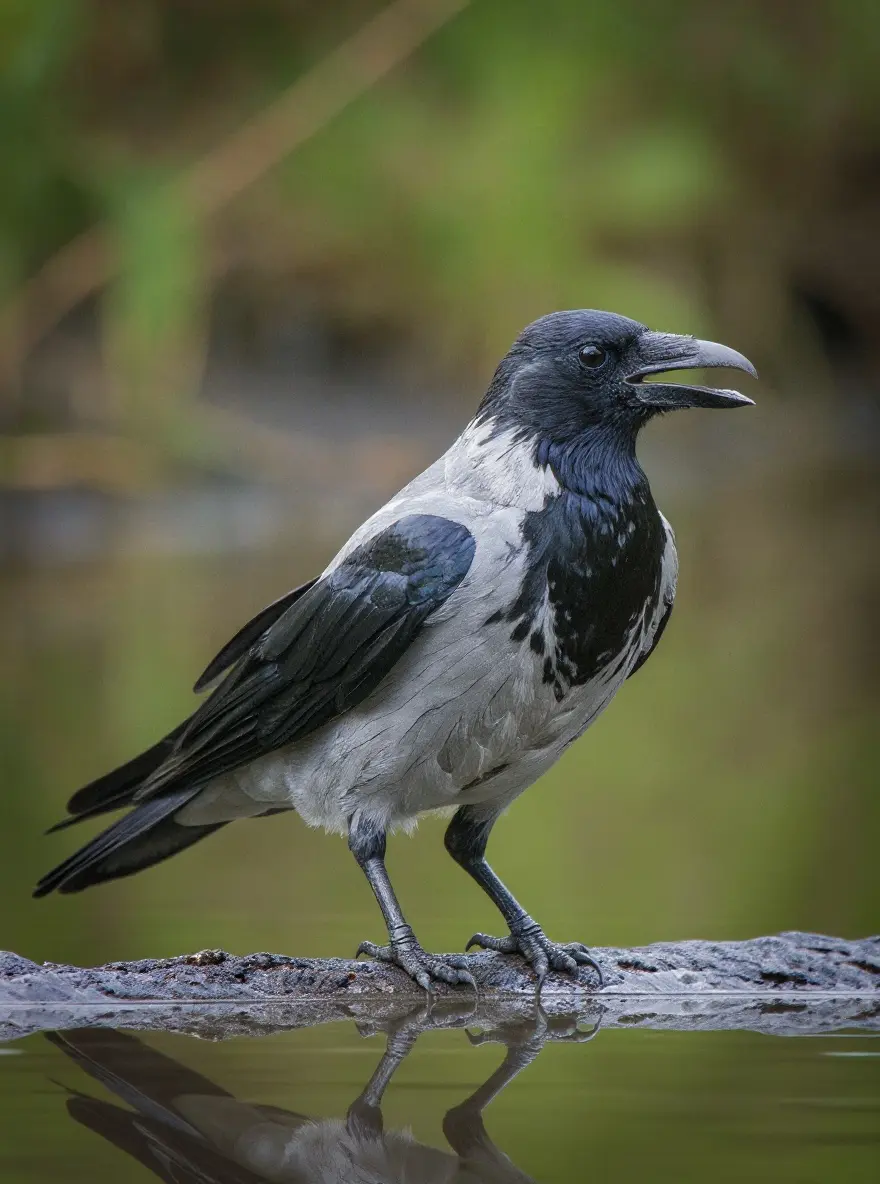
This behavior offers a beautiful principle for system design and problem solving: sometimes the solution is not to produce more force, but to use forces that already exist in the environment. A stronger beak may not be necessary to crack the walnut; when hard surface, height, and impact meet in the right way, the problem can be solved through another route.
A similar idea appears in biomimetics and design thinking. A good system does not rely only on its internal capacity; it also takes surrounding possibilities into account. Surface, weight, timing, repeated trials, and feedback can all become part of the solution.
The crow’s walnut behavior does not give us a direct technology recipe. But it does invite this thought: an intelligent solution is sometimes not defeating the problem alone, but reading the environment that carries the problem.
Up Close
Imagine that you cannot open a walnut with your hand. You might hit it on a table, crack it with a stone, or drop it onto a harder surface. The same force can produce a different result on a different surface. The question is not only “how much force is there?” but also “where, how, and onto what surface is that force transferred?”
In the crow’s scene, similar physics is at work. The walnut shell needs impact. The road surface receives that impact. Height increases it. Repetition creates a chance to learn. Inside a behavior that looks simple, mechanics, environment, and experience are woven together.
A Window for Reflection
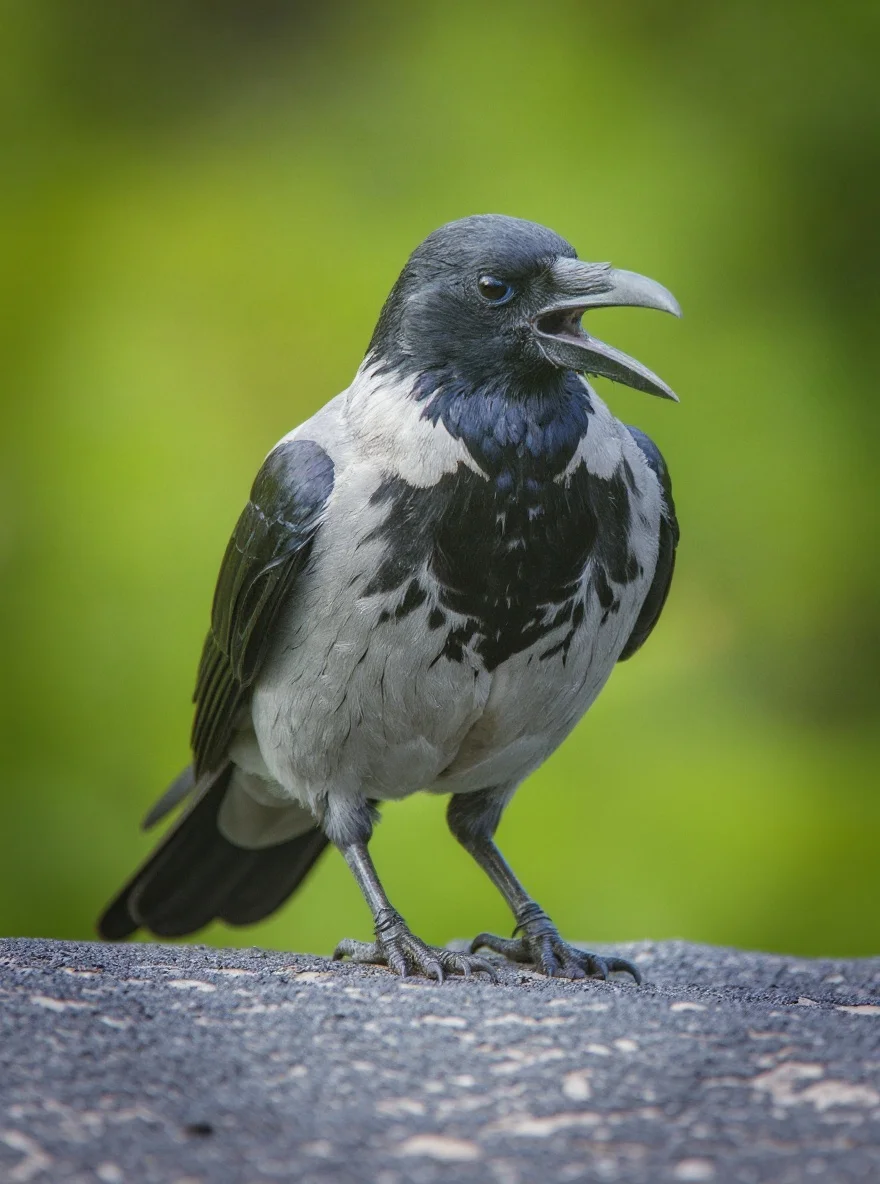
This small scene invites us to reflect on measure and suitability in creation. The walnut’s shell protects it, yet the world is also full of surfaces and conditions through which that shell can be opened. The perception, movement, and capacity to learn given to the crow open a path for it to seek provision in harmony with its environment.
Wonder here is not about glorifying the bird as an independent hero. It is about noticing how the abilities given to it meet the environment around it. Hard shell, hard ground, falling, trying, and result… all stand side by side as measure, cause, and possibility in the world Allah has created.
Even a crow meeting a walnut can remind us of this: in the created world, provision does not always arrive as a ready mouthful. Sometimes it opens through seeking, movement, trial, reading the environment, and turning toward the right cause. This order is a doorway to both wonder and gratitude.
What It Tells Us Today
The crow’s encounter with the walnut shows that problem solving is not only a matter of strength. Sometimes the solution begins by noticing the possibilities already present around us, rather than searching for a force we do not have. A hard surface, a right angle, a little height, and another try can open what first seemed closed.
This perspective matters for human life as well. Some problems are not solved by pushing directly against them. We need to read the setting, notice the available means, make small attempts, and learn from the results. What the crow does on the road surface reminds us of a simple but deep principle: the solution often lies in understanding the problem together with its environment.
For DuaMio Discovery, the beauty of this scene is exactly here: science shows the physical and learning pattern inside a small behavior; reflection invites us to notice the wisdom behind that order. A walnut, a road, and a crow… sometimes wonder begins when we start seeing the measure in Allah’s creation even in the most ordinary corner of a city.
Discover, marvel, remember the Creator.
Sources
- Hero image source: File:Nutty crow (52394716720).jpg
- https://www.jstage.jst.go.jp/article/jjo/68/1/68_43/_article/-char/en — Nut-cracking behavior by carrion crows in Hakodate involving roads, walnuts, and automobile effects.
- https://digitalcommons.usf.edu/cgi/viewcontent.cgi?article=23058&context=auk — Crow food-dropping behavior on hard surfaces and the mechanical context of vehicle involvement.
- https://pmc.ncbi.nlm.nih.gov/articles/PMC2734031/ — New Caledonian crows and relation-sensitive physical problem solving.
Coming soon
Listen to these topics in the app, track your progress.
In the DuaMio app you’ll listen to every topic — not to memorize, but to comprehend.
Image note: The hero image of this article is a real source photograph; source here. The three in-article images were generated with AI from that real reference to illustrate the subject more clearly.
Content note: This article was compiled with AI assistance based on reliable scientific sources and editorially reviewed before publication.