Discovery · Animals · Amphibians
Short Answer
An axolotl does not heal a lost leg merely by “closing the wound”; under the right conditions, it can build a new limb from that region. Bone, muscle, nerves, blood vessels, and skin are reorganized. Some experimental studies have also shown that in certain brain regions, it can re-establish lost neuronal diversity.
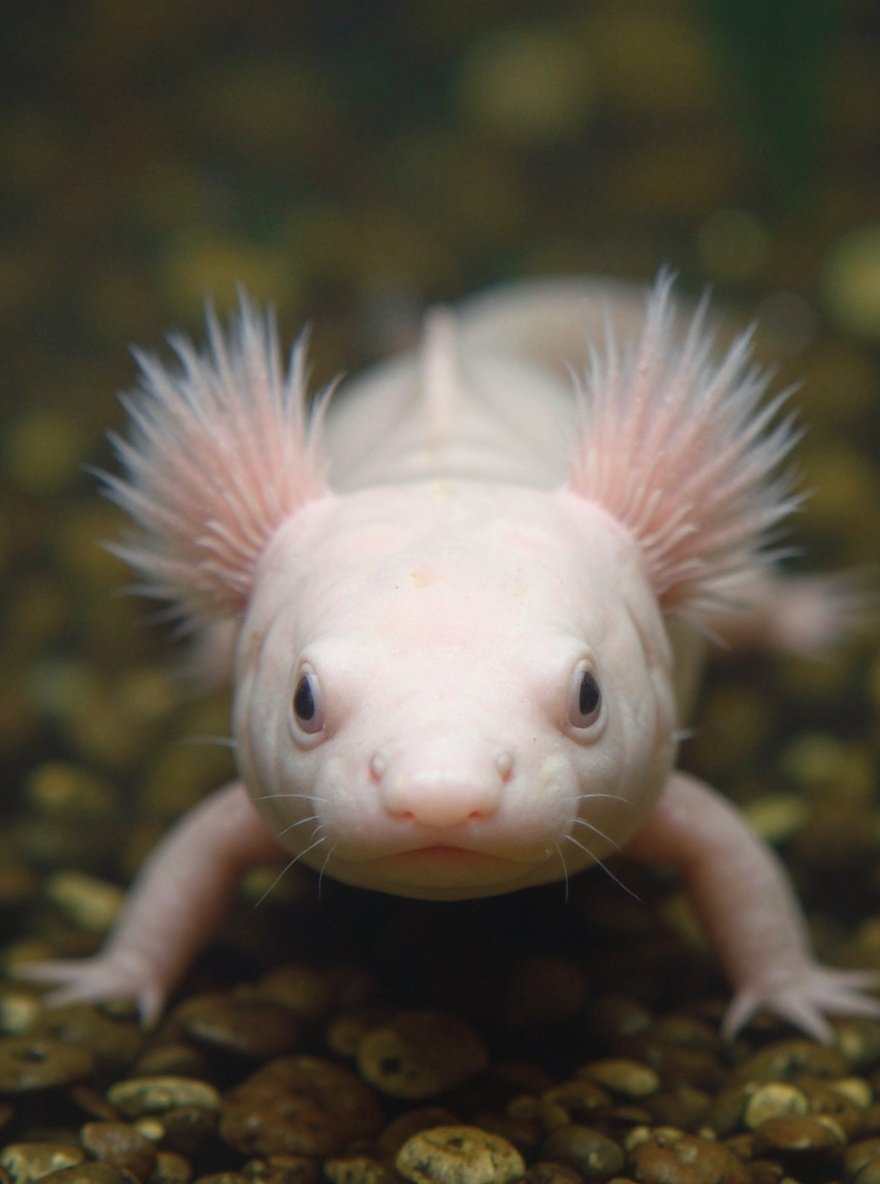
This is not simple “meat growing back.” First the wound closes quickly. Then a regeneration bud forms at the cut site, where cells multiply; this is called a blastema. The blastema is like a construction site for the new limb. The most striking point is that the new tissue does not grow randomly. Cells retain a kind of “positional memory” about where they belong in the limb. This makes it possible for the hand, digits, bones, and other tissues to appear in the right places.
In the human body, a deep wound often closes with scar tissue. In the axolotl, a similar injury can turn into a controlled rebuilding process. That is why the axolotl is one of the most important model animals for regenerative medicine. Seeing a missing part rebuilt with measure in such a small body opens a quiet door to reflection.
Real observation video: you can watch the axolotl’s body structure and regenerative power through live observation footage.
What Are We Observing?
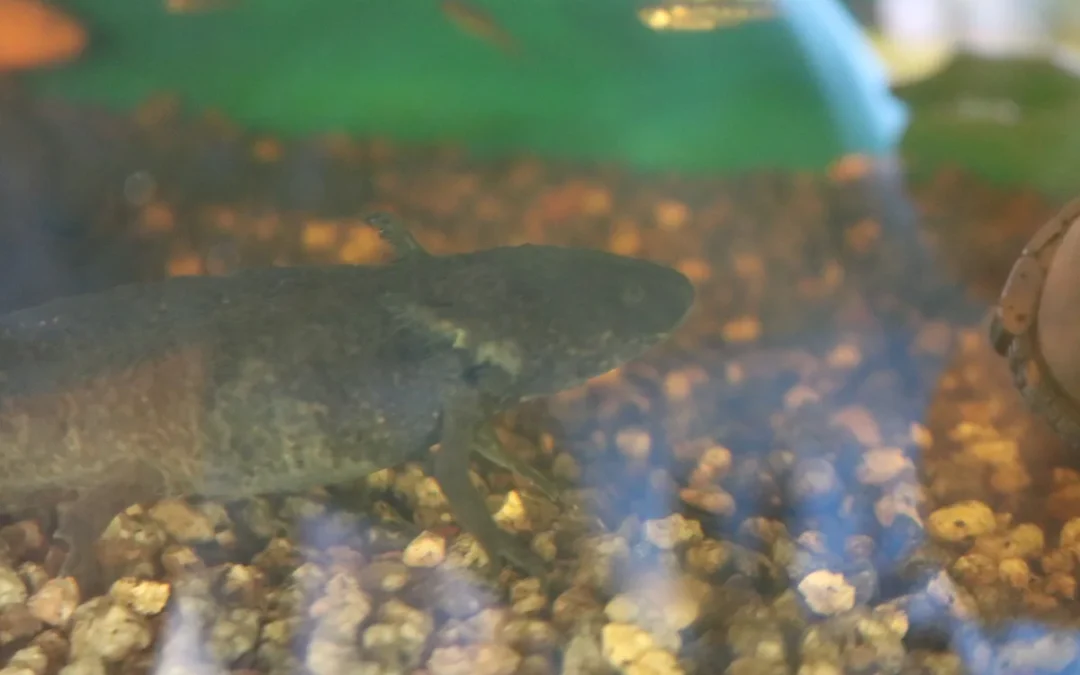
From the outside, an axolotl looks like a calm aquatic salamander with feathery gills on each side of the head and a soft body. But this small creature has a remarkable feature: it can regenerate lost limbs.
When an axolotl’s leg is lost, the wound does not stay open. It is quickly covered by a special wound layer. Then a small swelling appears beneath the cut surface. This swelling grows, takes shape, and becomes the foundation of the new limb. Over weeks and months, the missing structure reappears.
Even more importantly, the regenerated part is usually not just a simple “extension.” Nerves pass through it, blood vessels form, muscles attach, bones and joints are patterned. The issue is not just growth; it is rebuilding with the right plan.
The Science
Several links work together in axolotl regeneration.
The first link is the wound response. After injury, skin cells quickly cover the cut region and form a special wound epidermis. This layer sends signals to the tissues below: rebuilding can begin.
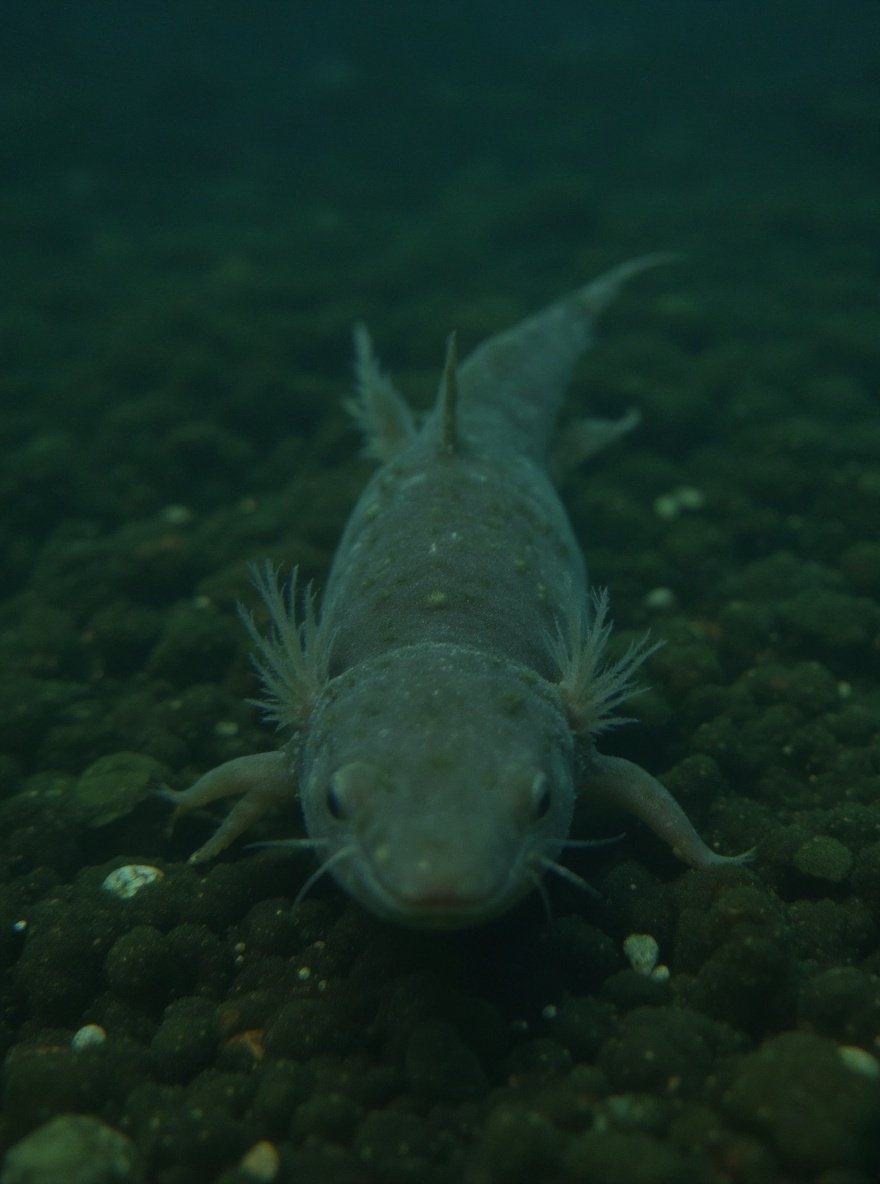
The second link is blastema formation. Some cells near the cut region begin multiplying and form a mass of cells called the blastema. Current studies show a careful picture: cells become flexible, multiply, and join the rebuilding process, but they still keep traces and limits related to the tissue they came from.
The third link is the role of nerves. Limb regeneration depends strongly on signals from nerves. If nerve connection is not sufficient, blastema growth weakens. This shows that regeneration is not only cell multiplication; it requires close communication between the nervous system and tissue.
The fourth link is positional memory. A new limb does not grow as a random mass; front-back, top-bottom, and near-far patterning must be preserved. A 2025 study in Nature revealed an important mechanism related to maintaining posterior identity through the Hand2/Shh signaling loop during axolotl limb regeneration. Cells do not completely lose the information that says, “I belong to this side of the limb.” This helps new tissues settle into place with the correct pattern.
The axolotl is also an important model for the brain. Single-cell analyses published in Science in 2022 examined organization, neurogenesis, and regeneration in the axolotl telencephalon. We must be careful here: this does not mean “the entire brain regenerates without limit.” It refers to specific regions, specific injury models, and specific cell types.
The “Wow” Moment
The real wonder is not “growth again,” but correct growth again.
If a wall falls down, it is possible to pile bricks back up. But rebuilding the same wall with its window, door, wiring, pipes, and supporting structure in the right places is a very different matter. Something similar happens in the axolotl limb: muscle must connect to muscle, nerve to nerve, bone to bone. And connection alone is not enough; direction, order, and proportion must also be preserved.
That is why axolotl regeneration cannot be dismissed as “cells growing very fast.” Wound epidermis, nerve signals, blastema, connective tissue, positional memory, and patterning mechanisms work together. Every part depends on the others.
What Humans Learned
The most important human connection is regenerative medicine. Severe injuries, burns, spinal cord damage, organ failure, and limb loss are still major medical challenges. Scientists study the axolotl to ask:
- https://commons.wikimedia.org/wiki/File:Ajolote_adulto.JPG — Real source photograph used for the hero image (Wikimedia Commons).
- Why does a wound become scar tissue in some creatures but trigger rebuilding in the axolotl?
- Which signals tell cells to multiply and reorganize?
- How is positional memory preserved?
- How does the nervous system help tissue regeneration?
- How can neuronal diversity be rebuilt in central nervous system injury?
We should be honest here: humans are not regrowing arms today because of axolotls. No ready-made treatment has been taken directly from this creature. But the axolotl acts like a living laboratory for questions human medicine wants to solve. Its value for regenerative medicine lies there.
Up Close
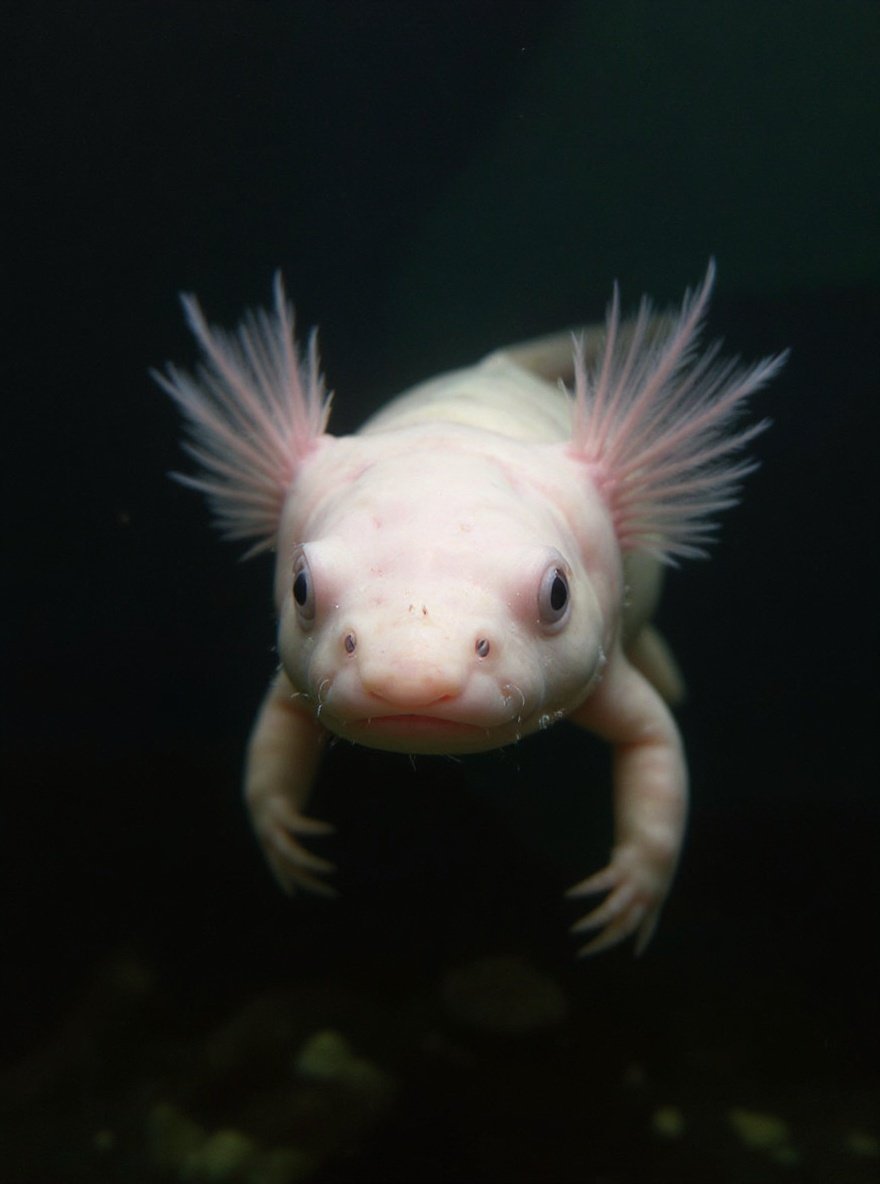
An axolotl does not understand the process inside its body. It does not decide, “Now I will form a blastema, adjust the Hand2/Shh loop, and organize nerve connections.” It is a dependent creature living within the bodily order it has been given.
Yet the systems placed in its body are so delicate that even in a cut limb, information about where to restart can be preserved. A wound does not merely close; under certain conditions it becomes a starting point for a new structure. This makes us think about both the subtlety of biology and the measure in creation.
In one place, scar tissue forms; in another creature, a rebuilding program runs. A cell does not merely multiply; it is guided by signals that help determine where it is, what it should become, and how it should relate to neighboring cells. Such broad coordination in such a small body leads the human mind toward wonder.
A Window for Reflection
The axolotl did not build this system. It does not bring back a lost limb “by intelligence.” It did not give cells positional memory. It did not design the nerve signals, blastema order, wound response, or regenerative capacity in brain tissue. All of these are measures given to it and placed in its created nature.
Wonder should be directed not at the animal as a hero, but at the order visible in the animal. Instead of saying “what a talented animal,” we should ask, “How was such a coordinated regeneration program placed in this small body?” The axolotl neither built itself nor wrote the plan of regeneration. It carries a program given to it.
Reflection begins here: in the rebuilding of a lost limb, in cells moving to the right place, in the harmony of nerves and tissues, the mind encounters “measure.” And measure reminds us of the One who placed the measure.
What It Tells Us Today
The axolotl reminds us that healing is not only “closing.” Sometimes true healing means restoring order correctly in the place of what was lost. The human body can do this in limited ways; in the axolotl, the boundary is much wider.
When we look at this creature, we also see our own dependence. Modern medicine has great tools, yet we still cannot rebuild a human limb from beginning to end. At the same time, such a program runs in the body of a small salamander. This opens a door to reflect on the source of knowledge and power.
Discover, marvel, remember the Creator.
Sources
- Otsuki et al. (Leo Otsuki, Tanaka lab), Nature, 2025 — “Molecular basis of positional memory in limb regeneration”. Nature
- Lust et al., 2022 — “Positional Memory in Vertebrate Regeneration”. PMC9248832
- Tosches et al., Science, 2022 — “Single-cell analyses of axolotl telencephalon organization, neurogenesis, and regeneration”. Science
- Amamoto et al., 2016 — “Adult axolotls can regenerate original neuronal diversity in response to brain injury”. PMC4861602
- NSF, 2025 — axolotl limb regeneration summary. NSF
Coming soon
Listen to these topics in the app, track your progress.
In the DuaMio app you’ll listen to every topic — not to memorize, but to comprehend.
Image note: The hero image of this article is a real source photograph. The three in-article images were generated with AI from that real reference to illustrate the subject more clearly.
Content note: This article was compiled with AI assistance based on reliable scientific sources and editorially reviewed before publication.