.dua-fig{box-sizing:border-box}@media(max-width:680px){.dua-fig{float:none!important;width:100%!important;margin:0 0 20px 0!important;display:block}}
Discovery · Animals · Amphibians
Short Answer
Many people assume that a brightly colored poison dart frog “produces” its poison inside its own body. In reality, the situation is the opposite: these frogs do not make their toxins themselves. The poison comes from what they eat.
In rainforest habitats, poison dart frogs feed on ants, tiny mites, millipedes, and other small arthropods. These small creatures contain bitter and toxic compounds called alkaloids. As the frog eats them, it absorbs the ready-made alkaloids through the gut and stores them in special glands in the skin. So the frog is not a chemist synthesizing poison; it is more like a body that has been equipped to collect and safely store compounds that come from outside.
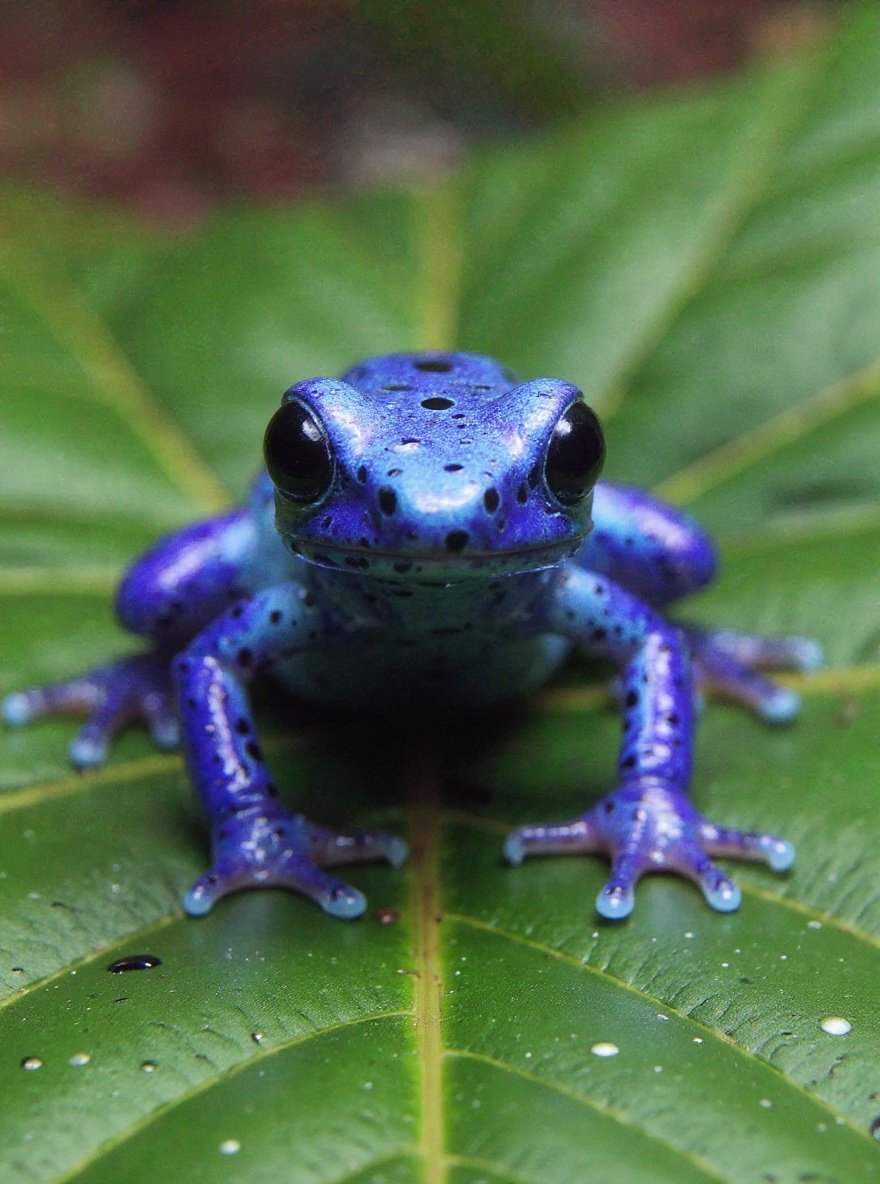
One of the clearest proofs is this: frogs raised away from their natural diet, on non-toxic foods such as fruit flies and crickets, become non-toxic and are not dangerous to humans. This means the poison is not the frog’s own achievement, but something that comes through the provision placed in its diet. Such a delicate system of carrying and storing harmful substances opens a quiet door to reflection.
Real observation video: you can watch the poison dart frog’s bright warning colors and defensive logic in live footage.
What Are We Observing?
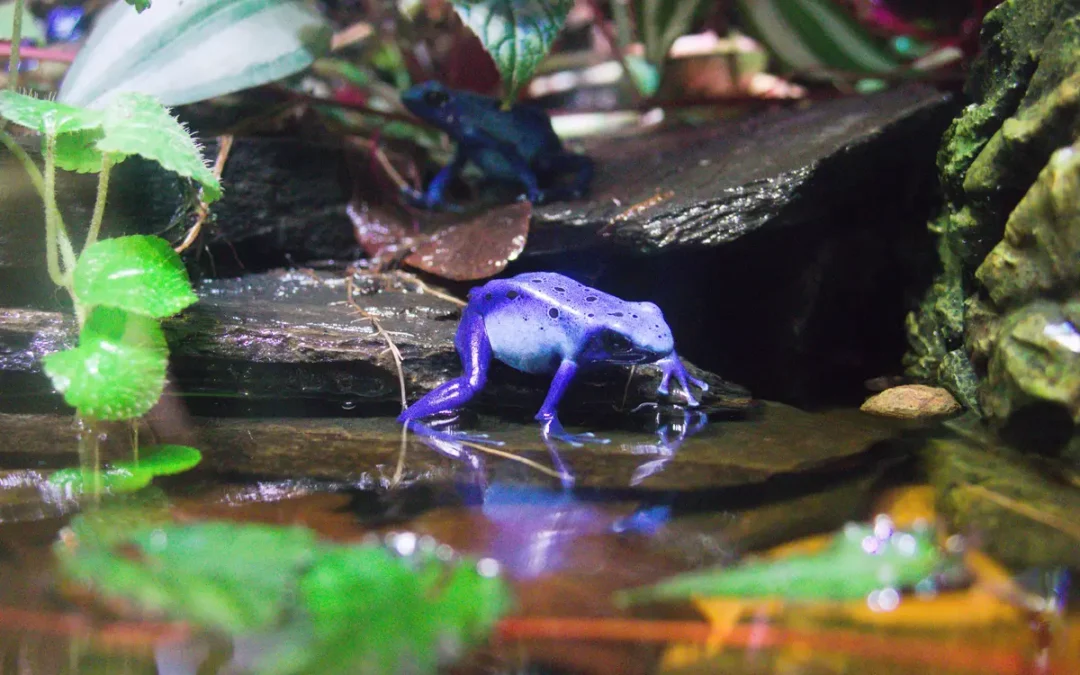
Poison dart frogs are tiny but visually striking: bright yellow, orange, blue, or red patterns cover their bodies. These vivid colors are not a form of hiding; they are a warning signal. In biology this is called aposematism. The colors tell predators, in effect: “do not eat me; I am toxic.”
When scientists compare individuals from the wild with those raised in captivity, they see a striking difference. Wild frogs carry powerful alkaloids in their skin, while captive-born individuals of the same kind are often nearly non-toxic. The key difference is diet. This simple observation points directly to the source of the toxin.
The Science
Recent work from Lauren O’Connell’s group at Stanford has helped explain how poison frogs acquire toxins and how they avoid harming themselves while carrying them.
The first link begins with diet. Ants, mites, and similar prey carry alkaloids in their own bodies. When the frog eats these animals, the alkaloids are absorbed from the gut and enter the bloodstream. More than 500 different alkaloids have been detected in dendrobatid frog skin, so the “poison” is not one single substance; it is a rich mixture that changes with diet.
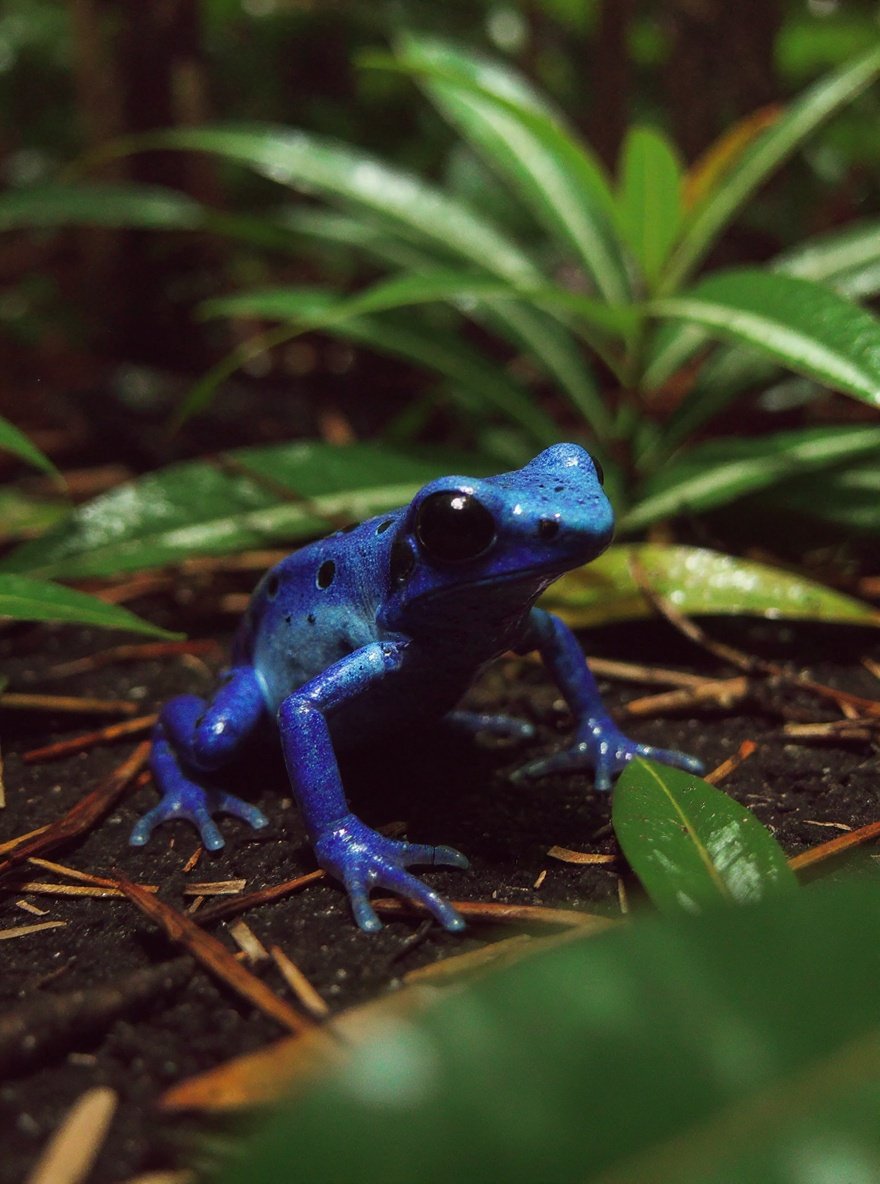
The second link is transport and storage. The poison is not kept in one central gland. Instead, it is stored in granular glands spread through the skin. When threatened, these glands release their contents onto the skin surface, and a predator encounters a bitter or toxic defense.
The third and most delicate link is self-protection. A 2023 study in eLife found a plasma protein from the serpin family that binds alkaloids in frog blood. This protein may help carry alkaloids safely to the skin and may support the storage of different toxin types. Earlier work from the same group also showed that toxin intake can rapidly change transporter proteins, immune responses, and metabolic processes. In some species, changes in the target sites affected by toxins may add another layer of protection.
The “Wow” Moment
The striking point is this: the same substance can be deadly to one creature, while the frog can carry it and turn it into a shield. Accumulating poison inside the body would normally be extremely dangerous; yet in these frogs, toxin-binding proteins, skin glands, and warning colors work together.
So the system is not one isolated trick. It includes the right prey, a blood protein that binds the toxin, skin glands that store it, and colors that warn enemies away. If one part were missing, the system would not work in the same way. The way these different parts come together for one defense points to a fine harmony rather than a random collection of features.
What Humans Learned
We should be honest here: there is no ready-made industrial product simply “copied from poison dart frogs.” It would be wrong to say that the frog invented a technology.
Even so, the mechanism is genuinely interesting for researchers. Understanding how a living body can bind and transport a powerful compound without being harmed can give ideas for drug delivery and pain research, because some alkaloids affect ion channels in nerve cells — and those channels are central to pain studies. The lesson is not copy-and-paste; it is that a natural system can shed light on difficult human questions.
Science often advances this way: a carefully arranged system in a living creature opens new questions and new ideas. The deepest admiration belongs not to the human who studies it, but to the One who placed that order in a tiny creature.
Up Close
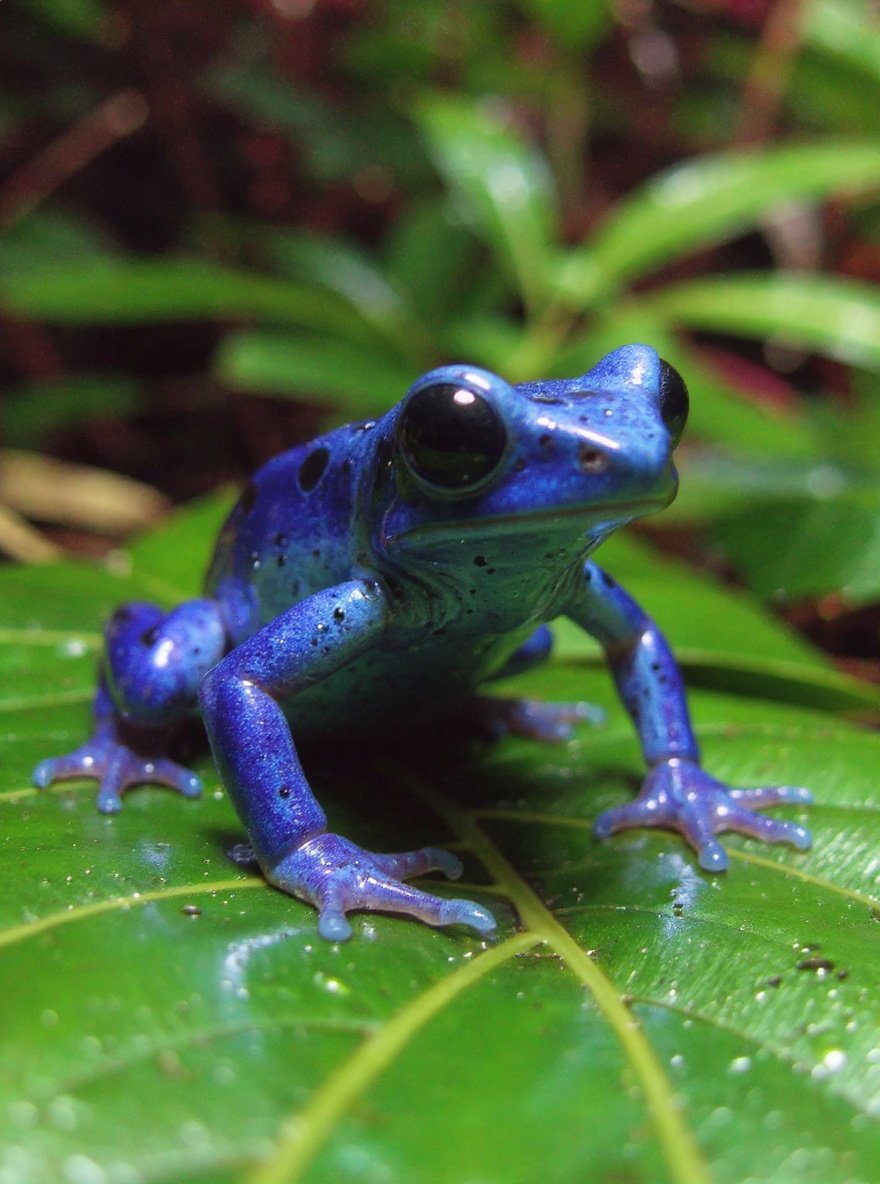
Think about it: the frog does not know chemistry. It does not “know” which prey contains which toxin. By eating its natural diet, its skin becomes equipped with a strong defense through processes placed inside its body.
This system is also flexible. Depending on where the frog lives and which prey are available, the toxin profile in the skin can change. The same kind of frog may carry different toxin mixtures in different forests. So the system is not a single fixed recipe; it works within a fine order that can vary with the environment.
A Window for Reflection
The poison dart frog is a dependent creature. It did not choose which prey would contain which compound, design the protein that carries the toxin in blood, build the glands that store it safely, or select the colors that warn predators away. All of this has been given to it and placed in its body beforehand. Even the poison is not produced by the frog; it comes through prey placed in its provision.
The Qur’an calls the human being to look at the order and measure in the living world and to reflect. What we see here is exactly that: a substance that could be harmful is turned, through the right carrier, right storage, and right warning, into a shield for a living creature. The frog did not establish this harmony by its own reason or strength; this measure was bestowed upon it. The One who placed the measure is its Creator.
Reflection is not saying, “what a clever animal.” It is being able to calmly ask, “Who made such a deadly substance harmless in such a small body and turned it into protection?” In that way, the gaze turns from the work to the One who brought it into being.
What It Tells Us Today
This frog reminds us that the line between “harmful” and “protective” often depends on right order and right measure. The same substance, in the right place with the right carrier, can become a defense; in the wrong place, it becomes danger.
The same perspective is meaningful for us: power, when placed with measure and in the right context, can be beneficial; without measure, it becomes harmful. Seeing such a fine balance in a palm-sized creature turns the human gaze away from self-importance and toward the wisdom of the One who set this measure.
Discover, marvel, remember the Creator.
Sources
- https://commons.wikimedia.org/wiki/File:Blue_poison_arrow_frog_(Dendrobates_tinctorius_%22azureus%22).jpg — Real source photograph used for the hero image (Wikimedia Commons).
- Alvarez-Buylla, O’Connell et al., eLife, 2023 — plasma protein that binds alkaloids (serpin globulin). eLife
- Caty, O’Connell et al., J. Exp. Biol., 2019 — “Molecular physiology of chemical defenses in a poison frog” (Oophaga sylvatica). JEB
- O’Connell et al., 2021 — “Rapid toxin sequestration modifies poison frog physiology”. PMC7888741
- Knight, K., Journal of Experimental Biology (Inside JEB), 2019 — “How poison dart frogs export potent poisons to their skins”. JEB
- Zoo Atlanta — “The world of poison dart frog toxicity” (granular skin glands). Zoo Atlanta
Coming soon
Listen to these topics in the app, track your progress.
In the DuaMio app you’ll listen to every topic — not to memorize, but to comprehend.
Image note: The hero image of this article is a real source photograph. The three in-article images were generated with AI from that real reference to illustrate the subject more clearly.
Content note: This article was compiled with AI assistance based on reliable scientific sources and editorially reviewed before publication.