Short Answer
A frog can launch its tongue outward in about 0.07 seconds — roughly five times faster than the blink of an eye — catch an insect, and pull it back into its mouth. With such a fast and forceful impact, you might expect the insect to bounce off and escape; instead, it sticks firmly.
The secret is that two things work at the same time. First, the frog’s tongue is incredibly soft — like a car shock absorber, it absorbs the force of impact so the forces that would throw the insect back are dampened. Second, frog saliva is not an ordinary liquid: at the moment of impact it becomes thinner and flows like water into all the tiny grooves and roughness on the insect; when the tongue pulls back, it suddenly thickens and turns into a sticky glue.
So the “instant increase in the tongue’s stickiness” does not happen because the frog decides to make it sticky. It happens because of the physical properties of the saliva — a fine arrangement worth pausing over when we look carefully.
Real observation video: you can watch how quickly and stickily a frog’s tongue captures its prey.
What Are We Observing?
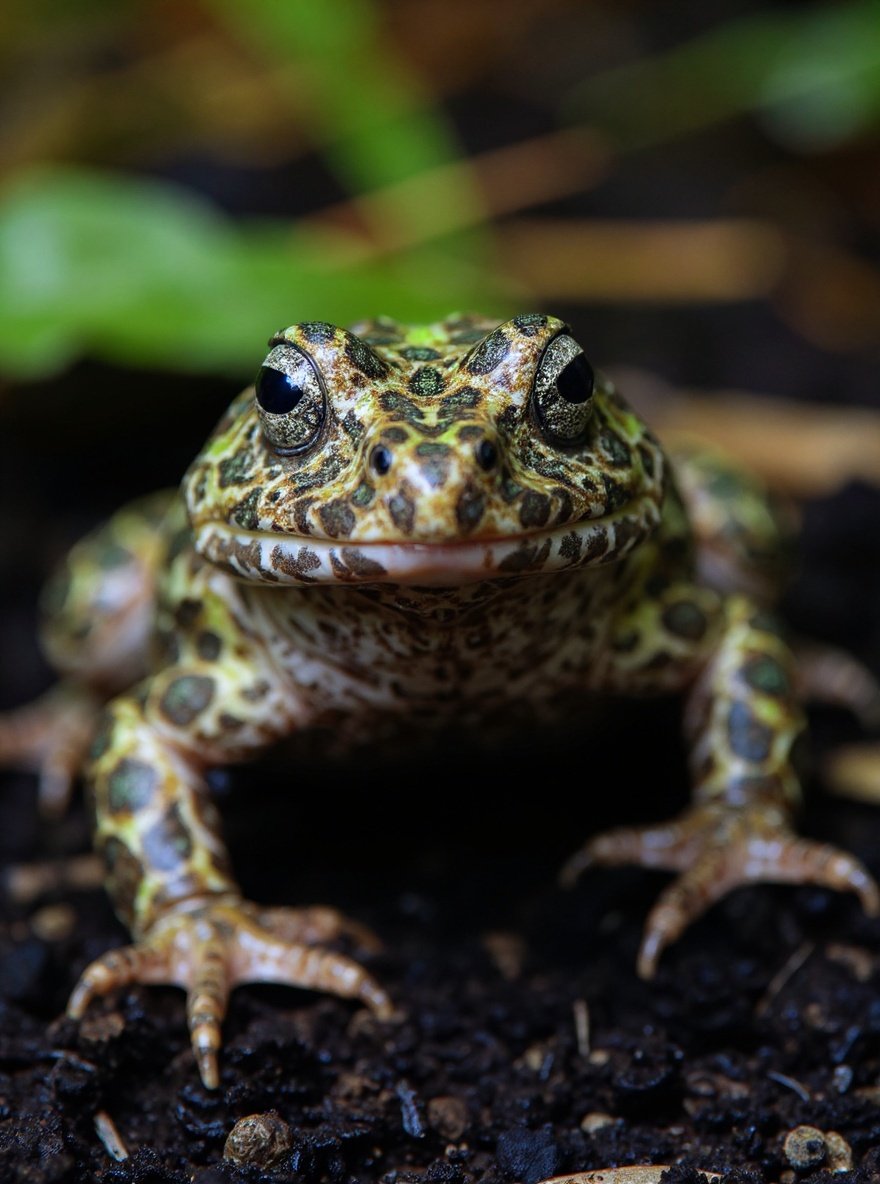
It is almost impossible to follow a frog catching an insect with the naked eye; everything happens in an instant. When high-speed cameras slow the moment down, a surprising scene appears: the tongue whips forward, hits the target, wraps around it, and pulls the insect back as if tearing it from its place.
Measurements show how intense this scene is: the insect is pulled toward the frog’s mouth with an acceleration of about 12 times gravity. That is much greater than the force astronauts feel during a rocket launch. Keeping the attachment from breaking under such a jolt is a question in itself.
The question that follows is a strange one: how can a tongue hold on through that kind of force? And how does it release the prey so easily once it is inside the mouth? Both answers come from the same system.
The Science
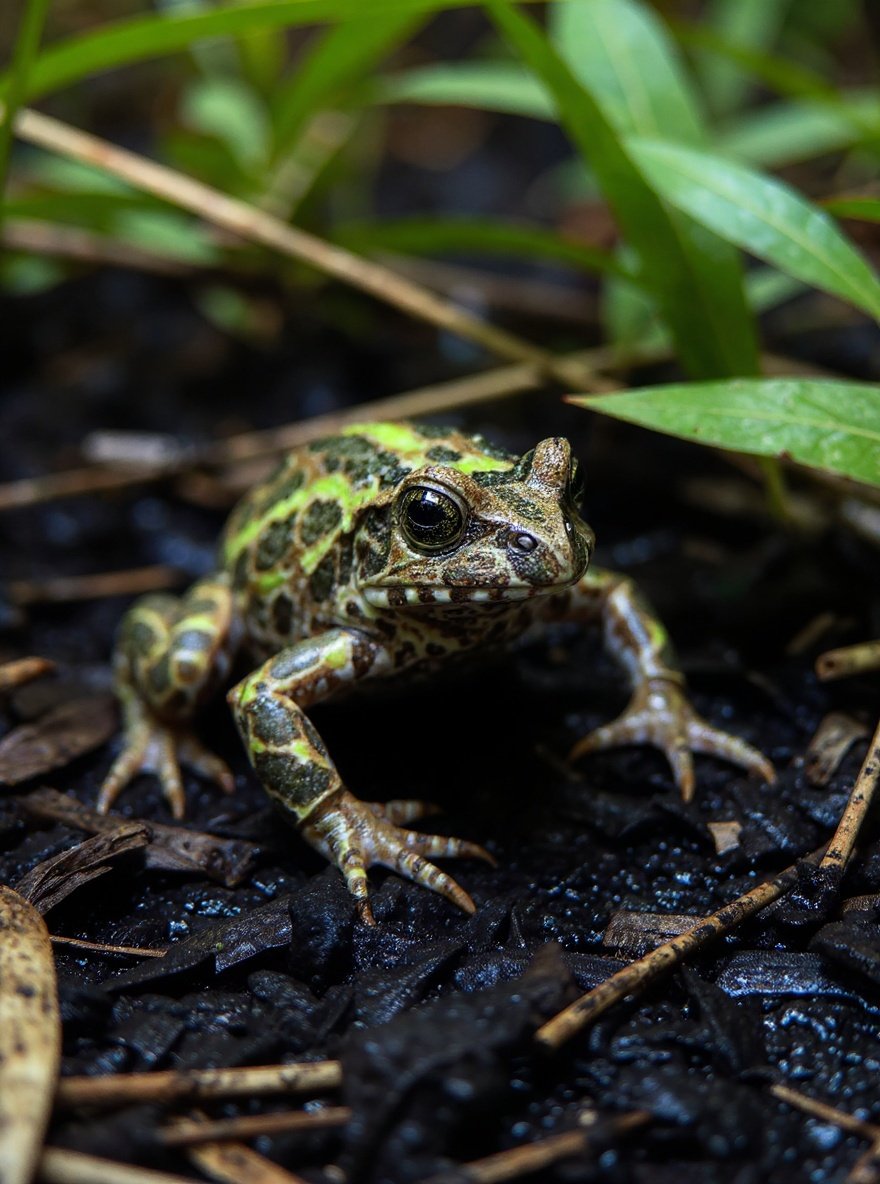
A 2017 study by Alexis Noel, David Hu, and colleagues at Georgia Tech, published in Journal of the Royal Society Interface, clarified this puzzle. The researchers measured both the structure of the frog tongue and the flow properties of the saliva.
The first finding was that the tongue is extremely soft and “viscoelastic.” A viscoelastic material can deform like a fluid while also springing back like an elastic solid. The frog tongue is many times softer than a human tongue; when it hits the insect, it spreads over it and increases the contact area, then stretches like a bungee cord during retraction and absorbs the force of the impact. This reduces the force that would pull the insect away, so the prey stays attached.
The second and most surprising finding was the saliva. Frog saliva is a “non-Newtonian” fluid — its viscosity changes depending on the force applied to it. When the tongue hits the insect quickly, the saliva becomes thinner, flows like water, and fills even the smallest spaces between the insect’s hairs and surface roughness. When the tongue starts pulling back, the saliva thickens again and behaves almost like glue, holding the insect firmly.
So how is the insect released once it enters the mouth? Here the frog’s eyes become involved: the eyeballs press downward into the mouth cavity, this pressure thins the saliva again, and the insect slides off the tongue toward the throat. The saliva therefore works in a “stick and release” cycle.
In this way, the frog’s tongue can pull a load up to about 1.4 times its own body weight — meaning some frogs can catch prey heavier than themselves.
The Wow Factor
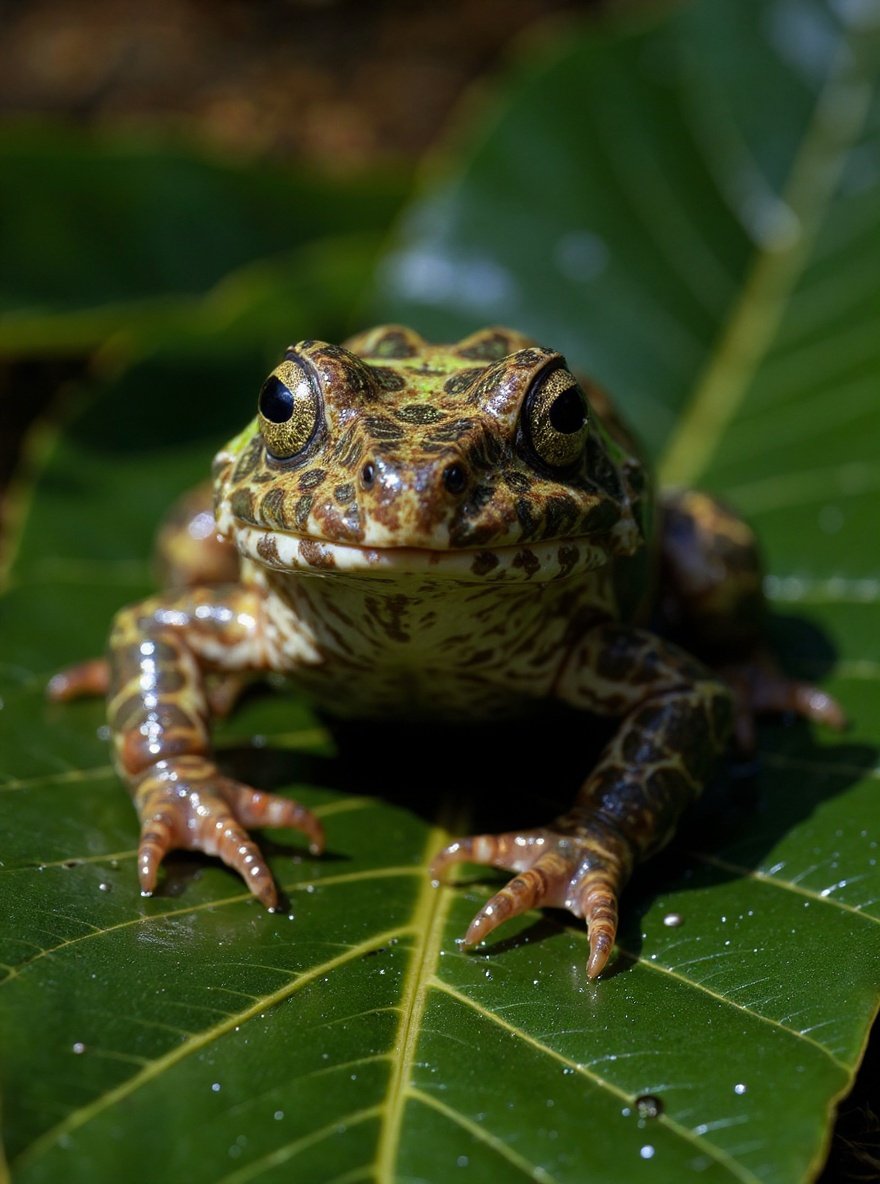
The real subtlety here is that two opposite needs are met at the same time. A glue that sticks quickly and releases easily when needed is difficult to engineer — those are usually opposing properties. Most strong adhesives do not let go easily once they attach.
In the frog system, however, the same saliva can become both “runny” and “sticky” depending on force, and the tongue’s softness completes that cycle. In a single design, fast capture, strong holding, and easy release are solved together. The meeting of so many different requirements in one small tool points not to a random accident, but to a measured order.
Stick fast, hold firm, release clean — three opposing demands solved in one fluid and one soft tongue, at the right moment each time.
What Humans Learned
To be honest: there is no ready-made commercial adhesive on the shelf today that is simply “inspired by frog tongue.” It would not be correct to say “the frog invented smart adhesives.”
However, the researchers themselves emphasize that this mechanism is inspiring for engineering. “Smart” fluids that change thickness according to force, and soft surfaces that absorb impacts, can give ideas for robotic grippers or next-generation adhesives that need to hold fast-moving objects without damaging them. The lesson is not copy-and-paste; it is that a solution seen in nature can open a new way of looking at a problem humans have not fully solved.
Science often moves like this: an elegant solution seen in a living creature gives people a new angle on their own problems. But the deepest admiration belongs not to the human trying to copy it — it belongs to the order that placed that solution in a small living creature from the beginning.
Up Close
When researchers examine frog saliva on a glass plate in the lab, they see how unusual it is. If you touch it slowly, it behaves thickly like honey; but when it is stirred or struck quickly, it thins and flows more easily. This “force-sensitive” behavior makes the saliva an excellent tool for capturing prey.
An insect’s surface is not smooth; it is full of hairs, grooves, and tiny roughness. An ordinary glue cannot always fit into such a rough surface properly. Frog saliva becomes thinner at impact and flows into those gaps; then it thickens and forms something like an interlocking grip. When we look at this level, a simple-looking “stickiness” turns out to contain a very fine adjustment.
A Window for Reflection
The frog is a dependent creature. It did not design its saliva to thin and thicken according to force; it did not make its tongue as soft as a shock absorber; it did not place its eyes so they could help release food during swallowing. All of this was given to it and placed in its body beforehand. What deserves admiration is not the frog’s skill, but this measured design bestowed upon it.
The Qur’an calls the human being to look at the order and measure in living creatures on earth and to reflect when seeing them. What we see in the frog’s tongue is exactly this: needs that seem opposite — sticking quickly and releasing easily — are brought together in one fluid and one tongue without ruining each other. Perfection is not in the creature itself, but in the balance given to it; and the One who placed that balance is its Creator.
Reflection is not saying, “what a clever animal.” It is being able to calmly ask, “Who placed such a fine arrangement in such a small mouth?” In that way, the gaze turns from the work to the One who brought it into being.
What It Tells Us Today
The frog’s tongue reminds us that difficult tasks are not always solved by brute force, but by showing the right property at the right time. If the saliva always stayed the same, it would not work; what matters is that it can be fluid when needed and sticky when needed.
The same perspective applies to us as well: instead of being rigid and unchanging, responding with the right quality at the right time is often stronger. And seeing such a fine adjustment in a palm-sized creature turns the human gaze away from self-importance and toward the wisdom of the One who set this measure.
Discover with wonder, remember the Creator.
Sources
- https://commons.wikimedia.org/wiki/File:Argentine_horned_frog_(Ceratophrys_ornata)_(23439792324).jpg — Real source photograph used for the hero image (Wikimedia Commons).
- Noel, Hu et al., J. R. Soc. Interface, 2017 — viscoelastic tongue and non-Newtonian saliva; prey capture mechanism. Royal Society · PMC5332565
- Nishikawa — “Neuromuscular control of prey capture in frogs” (tongue projection mechanics). PMC1692590
- Deban & Nishikawa, J. Exp. Biol., 1992 — prey-capture kinematics in Hyla cinerea. JEB
- Georgia Tech School of Physics — “The Frog Tongue Is A High-Speed Adhesive”. physics.gatech.edu
- Physics World, 2017 — “Frogs use non-Newtonian saliva to capture prey”. physicsworld.com
Coming soon
Listen to these topics in the app, track your progress.
In the DuaMio app you’ll listen to every topic — not to memorize, but to comprehend.
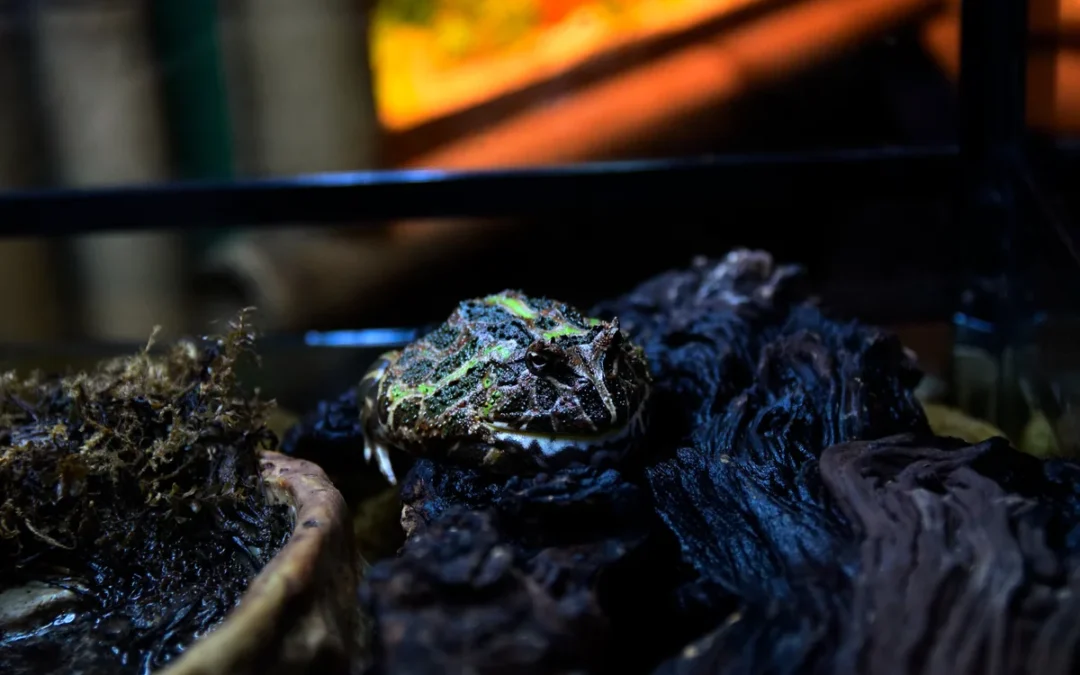
Image note: The hero image of this article is a real source photograph. The three in-article images were generated with AI from that real reference to illustrate the subject more clearly.
Content note: This article was compiled with AI assistance based on reliable scientific sources and editorially reviewed before publication.