
The frequent Qur’anic address “O you who believe” can, at first hearing, sound as though it is directed only at men. From this arises the question, “Does the Qur’an exclude women?” Yet once the matter is read together with Arabic grammar, the Qur’an’s mode of address, and the verses that explicitly name the responsibility of both women and men, the answer is clear.
The DuaMio Wisdom approach here is straightforward: first clarify the ruling, then show the context, then carry the wisdom into a language the person of today can understand.
The short answer: the masculine form does not simply mean “men”
In Arabic, when a mixed gathering containing both women and men is addressed, the masculine form is used; this is called taghlib (grammatical inclusion of females under the masculine plural). For this reason the phrase “Ya ayyuha alladhina amanu” — that is, “O you who believe” — encompasses believing women as well as believing men. When translated directly into Turkish or other modern languages, this can occasionally be misread; yet from the standpoint of Arabic itself, it is not a choice that excludes women but an inclusive grammatical structure.
The ruling layer: the shari’a-based address binds every responsible legal person
In Islamic law, unless there is an explicit indication to the contrary, the general addresses in the Qur’an bind both women and men. Rulings on prayer, fasting, zakat, ethics, the forbidden and the permitted apply to every responsible legal person (mukallaf), even when phrased in the masculine form. The Prophet (peace be upon him) confirmed this shared address in his words:
“Women are the counterparts (shaqa’iq) of men.”
— Abu Dawud, Taharah 94; Tirmidhi, Taharah 82 (hasan-sahih)
The general address of the Qur’an, then, does not make men the primary interlocutor of religion and place the woman to one side; the woman too is a direct addressee of Allah and a responsible legal person who bears accountability.
Al-Ahzab 35: the Qur’an also names women and men separately
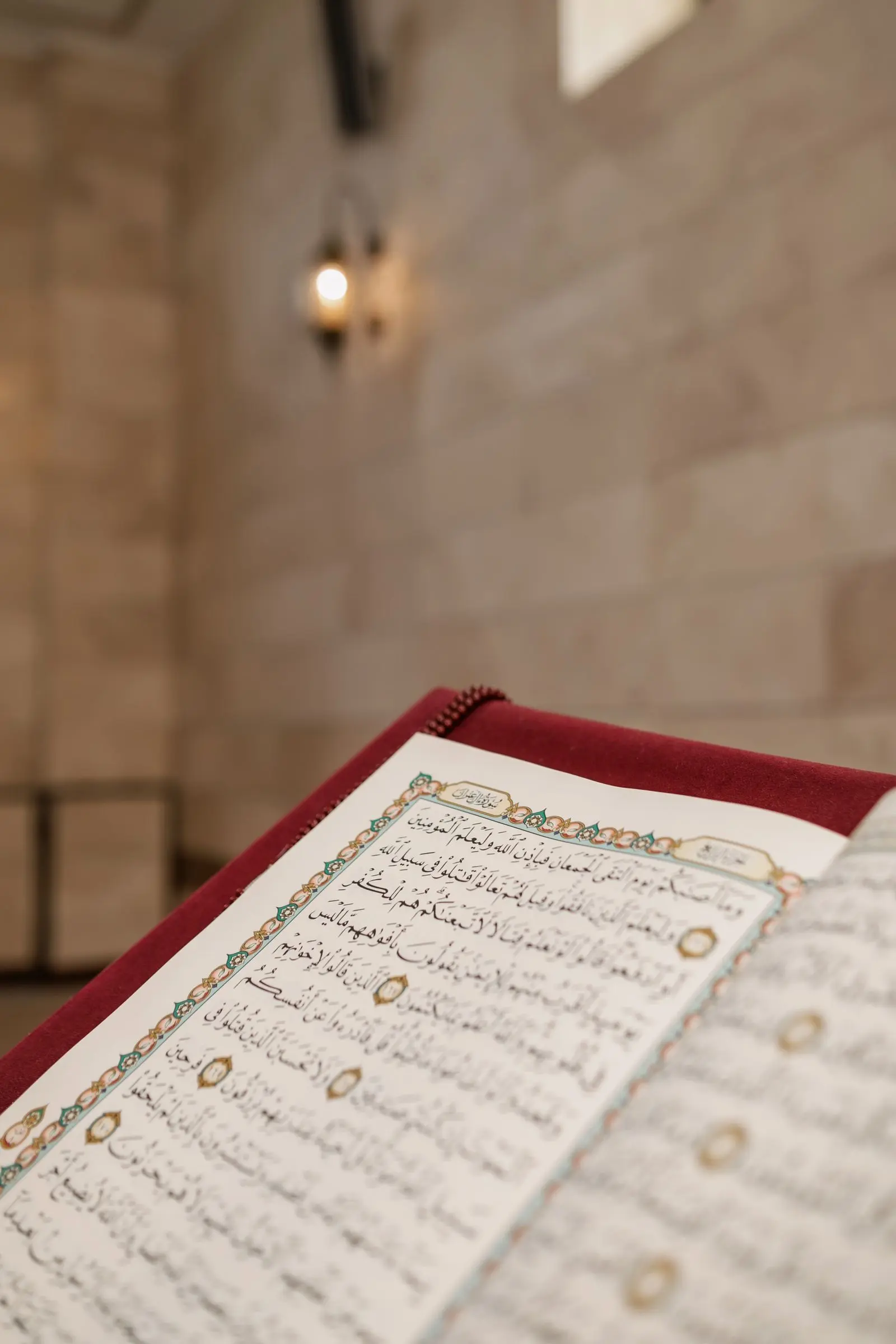
The Qur’an demonstrates in certain verses that the masculine address does not exclude women by naming women and men separately in plain terms:
“Indeed, the Muslim men and Muslim women, the believing men and believing women, the obedient men and obedient women, the truthful men and truthful women, the patient men and patient women… — for them Allah has prepared forgiveness and a great reward.”
— From verse 35 of Surah Al-Ahzab (Sahih International — quran.com)
This verse matters greatly: it makes plain that in the sight of Allah responsibility and reward are measured not by gender but by faith, deed and taqwa (God-consciousness). Indeed, the sources relate that this verse was revealed following an occasion on which the women among the Companions asked the Prophet (peace be upon him), “Why does the Qur’an speak of the men and not mention us separately?” This very occasion of revelation, through a divine clarification, underscores that the masculine address must be read inclusively.
The context layer: the woman as a direct addressee
The Qur’an positions the woman as a direct addressee of Allah. An-Nisa 1 stresses that humanity was created from a single soul; the woman was granted rights of inheritance, property, will and responsibility. The address “O you who believe” is to be read from this ground: the woman is the subject of religious and legal responsibility, and the address encompasses her, holding her directly accountable before Allah.
The wisdom layer: i’jaz and balaghah
The language of the Qur’an is one of i’jaz (rhetorical concision and miracle); it carries much meaning in few words. Repeating in every address, “O believing men and believing women,” is not required by the balaghah (rhetoric) and economy of speech of Arabic. The masculine form here serves as a short and potent address that encompasses the shared human gathering; this is the “economy of address” of the Arabic language. Where necessary, the Qur’an names women separately; in general rulings, it employs the natural inclusive form of the tongue.
A modern reading: grammar is not sexism
Critiques mounted today through the gendered structure of language sometimes take the grammatical structure of Arabic itself for straightforward gender discrimination. Yet every language has its own rules; in Arabic the masculine form is the general form for mixed gatherings, and this does not mean that men are more valuable in the sight of Allah. In the spirit of the Qur’an, superiority is bound not to gender but to taqwa:
“…Indeed, the most noble of you in the sight of Allah is the most righteous of you…”
— From verse 13 of Surah Al-Hujurat (Sahih International — quran.com)
An-Nisa 32 states that just as men have a share of what they have earned, women too have a share of what they have earned; and Al-Ahzab 35 openly displays the shared portion in spiritual responsibility and reward. Read together, these three verses reveal the Qur’an’s mode of address in full: gender is not the measure of superiority but the ground of shared addressee-hood.
One point must not be confused: the selection of prophets from among men belongs to a separate heading of duty — proclamation, public leadership and the bearing of heavy social struggle. This does not mean that the address “O you who believe” belongs to men alone. The general shari’a-based address encompasses the responsible legal person, woman and man together; the distribution of representation and duty is a separate discussion.
Common misunderstandings

1. “‘O you who believe’ is said only to men.”
No. In Arabic this address encompasses believing women as well as believing men (taghlib).
2. “The Qur’an treats women as second in rank.”
No. The Qur’an addresses women too as direct legally responsible persons, accountable and deserving of reward (Al-Ahzab 35).
3. “If women are not named separately, they are being excluded.”
No. The general address is inclusive; where particular emphasis is called for, the Qur’an names women separately (as in Al-Ahzab 35 and At-Tawbah 71).
In sum
Masculine addresses such as “O you who believe” in the Qur’an are not a theological choice that excludes women. This is the inclusive grammatical structure Arabic employs when addressing mixed gatherings (taghlib). The plain message of the Qur’an is this: woman and man are the servants of Allah; in responsibility, in reward, and in taqwa they are direct addressees. The measure is not gender but the intention of the heart and the soundness of the deed.
The question is not: “Why does the Qur’an address men?”
The real question is:
“Is a language whose grammar encompasses a mixed gathering in a single form the same thing as a faith that excludes the woman?”
DuaMio Wisdom Series
Wonder. Understand. Live.
Coming soon
Listen to these topics in the app, track your progress.
In the DuaMio app you’ll listen to every topic — not to memorize, but to comprehend.
Image note: The images in this article are license-cleared stock images chosen to suit the subject. Each image’s source and license are noted in its media description.
Content note: This article was compiled with AI assistance based on reliable sources; Quran verses are quoted verbatim from the approved translation (Sahih International for English), and the article was reviewed editorially and for religious sensitivity before publication.