Discovery · Animals · Birds
Short Answer
Gannets can dive from height while hunting and reach speeds of around 24 m/s. The main elements that reduce the risk of injury in this dive are pointed head-beak geometry, suitable diving speed, neck length, and stabilization by neck muscles. Some sources also state that air sacs in the face and chest region help cushion the impact.
The gannet does not dive only “thanks to the air sac in its neck”; it enters the water with an integrated impact-management system given to it. This system brings to mind airbags and impact-absorbing designs in human technology.
Real observation video (BBC Earth): gannets plunging into the sea like torpedoes.
What Are We Observing?
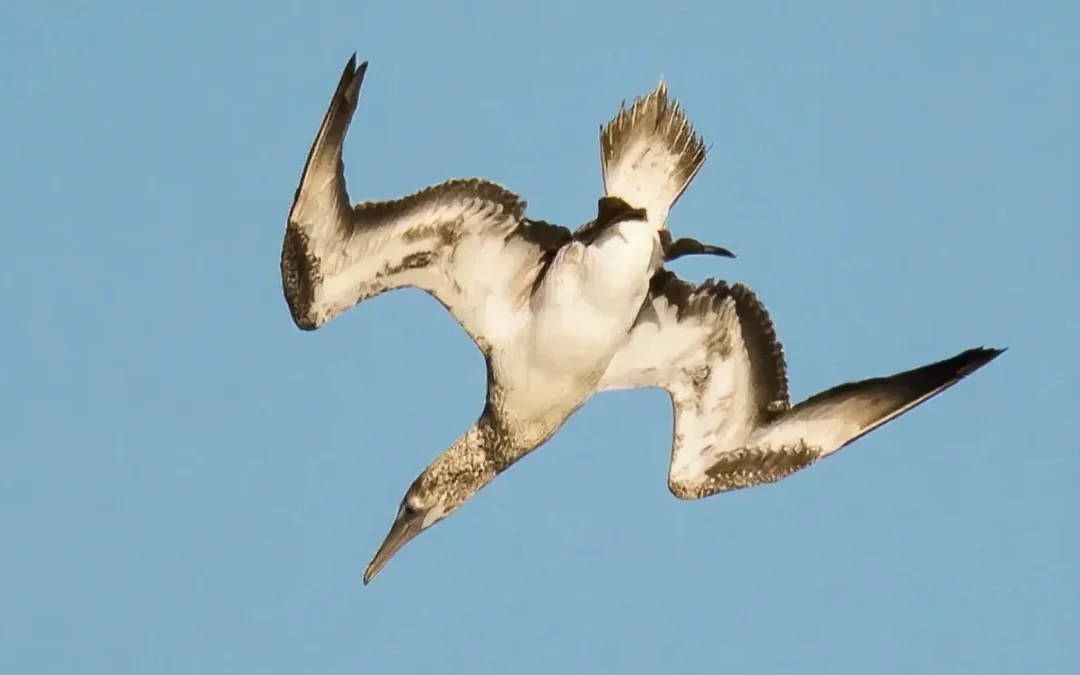
The gannet, or northern gannet, may suddenly fold its wings and dive toward the water while searching for prey over the sea. From a distance, this looks like a small spear entering the sea. But water creates very serious resistance when struck at high speed. For a human being, entering water at the wrong angle and speed can cause severe injuries.
That is why what makes the gannet’s dive special is not only speed. The truly striking point is that different elements such as high speed, slender body form, head-beak geometry, neck muscles, and air sacs work together.
The Science
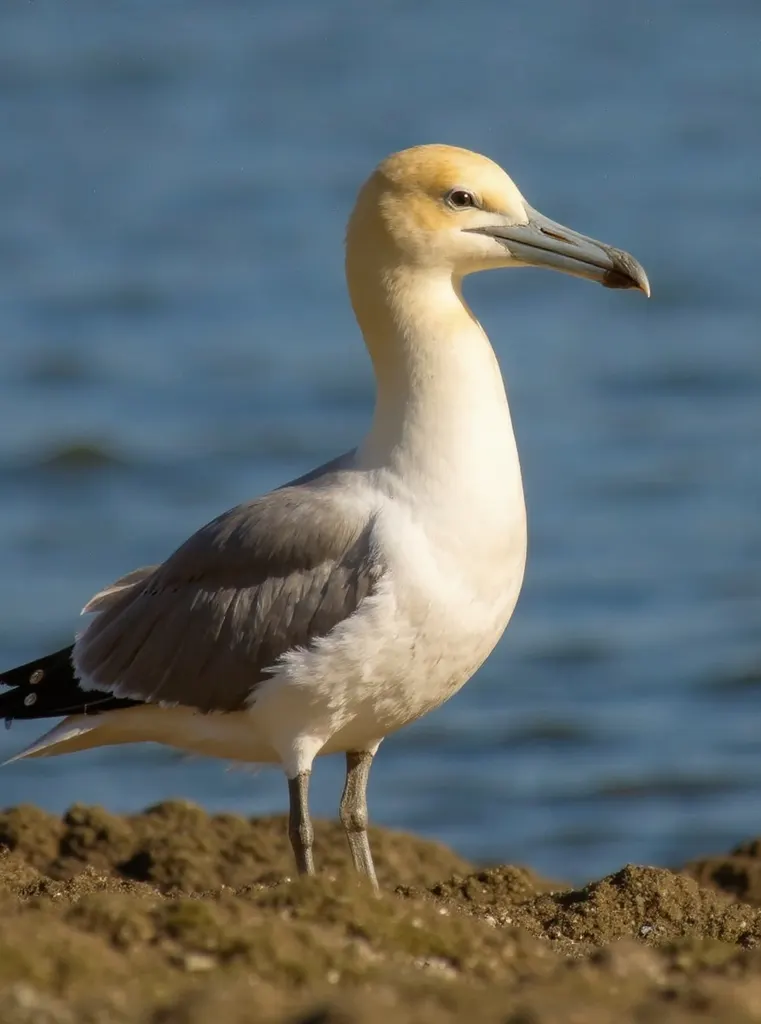
The PNAS study “How seabirds plunge-dive without injuries” examines mechanically how diving seabirds such as gannets and boobies can enter water without neck injuries. The research shows that the bird’s neck is theoretically exposed to buckling risk because of its long, slender structure, but that head geometry, diving speed, and neck muscles reduce this risk.
The study notes that neck muscles keep the neck more stable during water entry, and that the bird’s diving speed remains within critical limits. The Smithsonian Ocean source explains that in gannets, air sacs in the face and chest region can cushion impact like a car airbag. Together with the PNAS mechanism, this information shows that the dive should not be reduced to a single part.
The “Wow” Moment
The “wow” point is this: water looks soft, but when struck at high speed, it can behave like a hard surface. The gannet does not fall into the water randomly; it enters with a narrow and streamlined form, muscle stabilization, and impact-cushioning structures.
In a speed range that could be risky for humans, the body structure and movement order given to the bird make this transition possible. Speed alone is not impressive here; controlling speed, distributing force, and protecting the neck from buckling are the real points of wonder.
Inspired by Nature
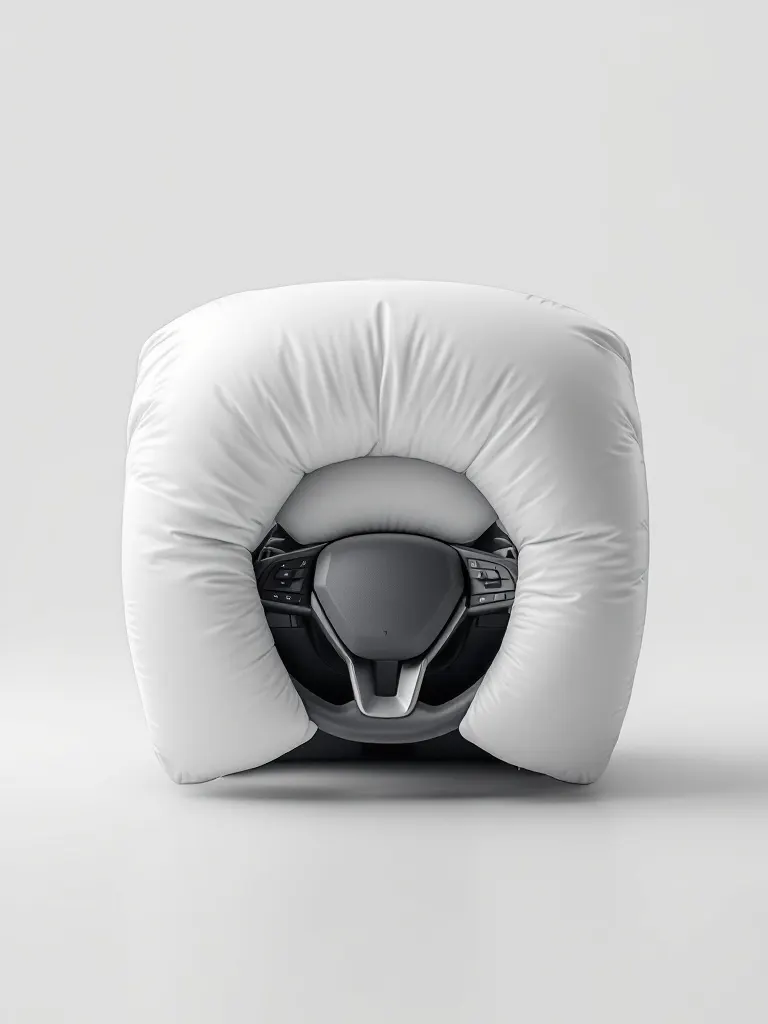
This subject offers a strong analogy with airbags and impact-absorbing systems. The purpose of airbag technology is also to spread force over a wider time and area during a sudden collision instead of concentrating it at one point. The air sacs and general diving geometry in gannets also recall the idea of managing impact.
However, human technology and bird anatomy are not exactly the same. The gannet subject shows us not so much that “there is an airbag in nature,” but that impact management can occur through multiple layers such as geometry, speed, muscle stability, and cushioning.
Up Close
Putting the flat end of a pencil into water does not create the same effect as inserting the pointed end. The pointed tip separates the water more regularly. Now imagine that behind the pencil there is a support that prevents bending. In the gannet’s dive too, head-beak form, neck, and muscle support must be considered together.
The moment of water entry lasts a very short time; but in that short moment physics is at work: drag, pressure, buckling risk, and energy distribution.
A Window for Reflection
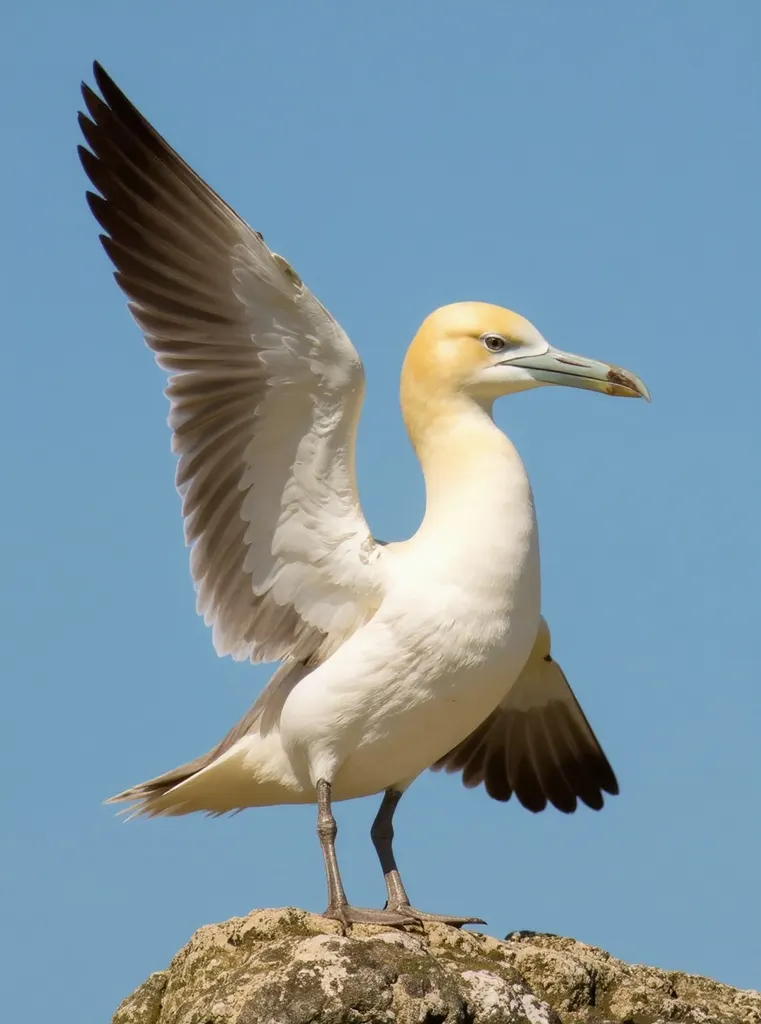
The gannet’s dive is a strong example for thinking about the multi-layered harmony in creation. The body given to the bird is suited not only for being fast, but also for managing the risk brought by speed. Wonder is not for attributing independent power to the bird itself; it is for reflecting on Allah’s creation, who gave it this body structure and way of life.
If mechanics, anatomy, and balance appear together even in a living being’s hunting behavior, it is not enough for a person to say, “I only looked.” When looked at carefully, there is measure inside the movement.
What It Tells Us Today
This subject teaches us that speed alone is not valuable. Speed gains meaning together with control and balance. In human technology and in life, being strong is related to managing impact correctly.
Scientifically, the gannet’s dive tells us about biomechanics and impact management. From the perspective of reflection, it reminds us that even behind an event that looks fast and harsh, there may be a subtle order of protection.
DuaMio Discovery aims to marvel with scientific accuracy even at the movement of a bird diving into the sea. The measure inside the dive reminds us to read the created world more carefully.
Discover, marvel, remember the Creator.
Sources
- Hero image source: File:Diving Gannet (27409066460).jpg
- https://www.pnas.org/doi/10.1073/pnas.1608628113 — Mechanics preventing neck injury during high-speed diving in seabirds.
- https://pubmed.ncbi.nlm.nih.gov/27702905/ — PubMed record of the same PNAS study.
- https://ocean.si.edu/ocean-life/seabirds/diving-gannets — Gannet diving speed, air sacs, and Smithsonian explanation.
- https://pubmed.ncbi.nlm.nih.gov/22874749/ — Visual accommodation and prey tracking during diving in Australasian gannets.
Coming soon
Listen to these topics in the app, track your progress.
In the DuaMio app you’ll listen to every topic — not to memorize, but to comprehend.
Image note: The hero is a real source photograph (source). The two gannet images in the article were AI-generated from that same real reference. The airbag image is a separate technology illustration added to explain the subject.
Content note: This article was compiled with AI assistance based on reliable scientific sources and editorially reviewed before publication.